
The sweet spot in luxury watches isn't where most people think. Under $5,000 you can own a genuine Swiss automatic with an in-house movement, serious heritage, and design that will look just as good in twenty years. Here are the pieces that deliver the most watch for the money, organized by what you're looking for.
This budget also happens to sit at an interesting point in the market. Below it, you are largely buying reliable industrial watchmaking — good movements, decent finishing, sensible design. Above it, you start paying steeply for brand, scarcity and hand-finishing. Between those two zones is a band where the engineering is genuinely serious, the names are genuinely respected, and the price still bears some relationship to what went into the watch. If you buy carefully here, you are unlikely ever to feel you compromised.
What this budget actually buys
Expect a Swiss or Japanese automatic movement, a sapphire crystal, a fully solid steel case and bracelet, applied dial markers rather than printed ones, and meaningful water resistance. Many watches at this level carry chronometer certification, meaning the movement has been independently tested to run within a tight daily rate tolerance. Several offer in-house movements — designed and built by the brand rather than bought in — which was almost unheard of at this price a generation ago.
What you generally do not get is precious metal, elaborate hand-finishing on the movement bridges, or the kind of production scarcity that drives secondary-market premiums. That is a fair trade. The mechanical substance is all there; what you are giving up is largely decorative and reputational. For an explanation of what separates movement types and why it matters to ownership, see watch movements explained.
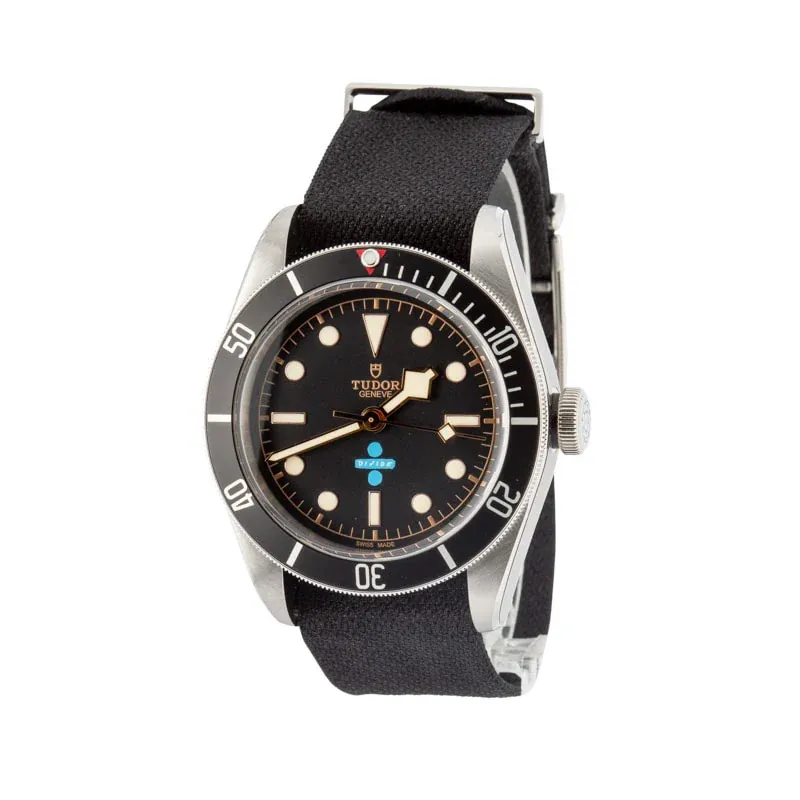
Best all-rounder: Tudor Black Bay
Founded by the same visionary behind Rolex, Tudor offers shared DNA and in-house, chronometer-certified movements at a fraction of the price. The Black Bay is a modern icon — vintage-inspired dive styling, bulletproof build, and the kind of wrist presence that punches far above its price. If you buy one watch under $5,000, this is the safe, brilliant choice.
What makes it the default recommendation is that it fails at nothing. It is water resistant enough for anything you will do, legible in the dark, comfortable on a bracelet, and it dresses up far better than a dive watch has any right to. The in-house movement carries a long power reserve, meaning you can take it off on Friday and it is still running on Monday. There are several case sizes and dial variations across the line, so wrist size is rarely a barrier. If you want to understand exactly how the brand relates to its more famous sibling, our Tudor versus Rolex comparison lays it out.
Best dive watch: Oris Aquis
Independent and proudly mechanical, Oris makes some of the best-value Swiss automatics on the market. The Aquis is a genuine 300m diver with a distinctive, contemporary design that stands apart from the crowd — ideal if you want something a little different from the usual suspects.
Oris is one of the last sizeable Swiss brands still in independent hands, and it has committed entirely to mechanical watchmaking. The Aquis reflects that in its details: a properly ratcheting unidirectional bezel, a screw-down crown, strong lume and a case with faceted lugs that gives it a sculptural quality in person. It also comes in a wide range of dial colors, which is unusual at this level and makes it easy to find one that feels personal rather than default. If you want the full picture on the category, our dive watch buying guide covers what to look for.
Best dress watch: Longines Master Collection
For elegance, few brands match Longines at this price. The Master Collection delivers classic good looks, a high-grade automatic movement, and nearly two centuries of Swiss watchmaking heritage. It's the watch that quietly signals good taste.
The Master Collection is the sensible choice for anyone who needs a watch that works under a cuff. The cases are slim, the dials are restrained, and the range includes genuinely interesting complications — moonphase, calendar, chronograph — at prices that would be startling from a more fashionable brand. Longines also draws on a deep archive, and its heritage-inspired pieces reissue designs from its own history rather than inventing a fictional past. For a dress watch you expect to keep for decades, that authenticity counts.
Best heritage buy: Omega (pre-owned)
Yes, you can own an Omega for under $5,000 on the pre-owned market. A well-kept Seamaster or an older Speedmaster brings genuine top-tier prestige and a Co-Axial Master Chronometer movement. Buying pre-owned is the smart route into a brand that competes directly with Rolex.
Omega occupies rare territory: a brand with unimpeachable credentials — the moon landings, decades of Olympic timekeeping, the Bond association — that has not become so scarce that the entry point is out of reach. Pre-owned is the route, and it is a good one. Depreciation on the first owner's purchase is what puts these watches within range, and the watches themselves are built to run for generations. Older Speedmaster references with the hand-wound chronograph movement are particularly compelling, because you are buying a design that has barely changed since it went to the moon. Our Speedmaster versus Seamaster comparison works through which suits which buyer.
Best value in Swiss automatic: Tissot and Hamilton
Tissot (the PRX Powermatic 80 is a runaway hit) and Hamilton (the Khaki Field is a cult classic) prove you don't need to spend big for genuine Swiss quality. Both offer automatic movements, strong design, and everyday durability — perfect first automatics or additions to a rotation.
These two deserve more credit than they usually get. The PRX revived the integrated-bracelet steel sports watch at a price that made the style accessible again, and its movement carries a long power reserve. The Khaki Field is a direct descendant of genuine military-issue watches, and its appeal is that it is entirely unpretentious — a legible dial, a modest case, and nothing else. Neither watch is trying to be a flagship, and both are the sort of thing you can wear without thinking about it, which is a quality worth more than most spec-sheet advantages.
Best chronograph
Chronographs are where budgets usually break, because the complication is genuinely expensive to build well. At this level, the strongest routes are pre-owned. An older Omega Speedmaster is the obvious hero. Breitling's pilot chronographs turn up on the secondary market with serious mechanical substance and strong aviation heritage behind them. Longines builds chronographs into its heritage lines at accessible prices, and both Tissot and Hamilton offer mechanical chronographs that punch above their weight for a buyer who wants the complication without the outlay. To understand what you are actually paying for, see watch complications explained.
Beyond the obvious: brands worth a look
Grand Seiko is the strongest argument for looking east. Its dial texturing and mirror-polished case surfaces show a level of finishing that is genuinely hard to find at the price, and the pre-owned market is typically the most affordable route into the brand. Bell & Ross brings cockpit-instrument design that looks like nothing else on a wrist. And while IWC and Panerai mostly sit above this budget, older references from both can surface pre-owned and are worth watching for. Browse every brand we carry to compare the field, or see what is currently in stock across the full collection.
| Pick | Style | Why it works under $5,000 |
|---|---|---|
| Tudor Black Bay | Dive / all-rounder | In-house chronometer movement and Rolex-adjacent heritage |
| Oris Aquis | Dive | Genuine 300m Swiss diver from an independent brand |
| Longines Master Collection | Dress | Slim, elegant, real complications, deep heritage |
| Omega Seamaster / Speedmaster | Sport / chronograph | Top-tier prestige, reachable pre-owned |
| Tissot PRX Powermatic 80 | Integrated sports | Long power reserve, distinctive design, low outlay |
| Hamilton Khaki Field | Field / casual | Authentic military lineage, wear-anywhere simplicity |
New or pre-owned at this budget?
Pre-owned is what makes this budget interesting. The steepest depreciation on a luxury watch happens in the first years of ownership, and buying after that curve has flattened is how a buyer with $5,000 ends up wearing a watch that cost considerably more new. It also opens up discontinued references, which are often the more characterful choice.
The trade-off is that condition and authenticity now matter. A pre-owned watch should come with a service history or a recent service, a case that has not been over-polished into softness, and a movement that has been checked for rate and amplitude. Buy from a seller who inspects and guarantees what they sell rather than one who simply lists it. Our guide to buying pre-owned covers the process step by step, and how to spot a fake covers the warning signs.
Building a collection rather than buying one watch
There is a real question worth asking: one $5,000 watch, or two at half that? Neither answer is wrong, but they suit different people. A single strong piece gives you a watch with genuine presence that you will not feel the need to replace. Two watches give you range — a diver and a dress watch, say — and cover more of your actual life.
If you are inclined toward variety, a sensible pairing is one steel sports watch on a bracelet and one slim watch on leather. Between them they handle almost every situation. If you are inclined toward one watch, buy the one you would be happy wearing to both a beach and a funeral, which in practice usually means a diver or a clean three-hander. Straps do a lot of work here too — a single good watch with a bracelet, a rubber strap and a leather strap covers more ground than most people expect.
What to avoid
Be wary of fashion-brand watches carrying luxury pricing with off-the-shelf movements and no horological substance behind them. Be equally wary of buying purely on the assumption that a watch will appreciate — most do not, and the ones that reliably do sit well above this budget. If value retention is your priority, our investment guide is honest about which categories actually hold up.
Finally, avoid stretching to the absolute limit of your budget and leaving nothing for maintenance. A mechanical watch needs periodic servicing, and a pre-owned purchase may need attention sooner rather than later. Budgeting for that from the start is part of buying well, and our care guide explains what the ongoing commitment looks like.
How to choose
Start with how you'll wear it. Want one watch for everything? A Black Bay or a Seamaster. Dressier tastes? The Longines Master. Something distinctive? An Oris Aquis. On a tighter budget, a Tissot PRX or Hamilton Khaki delivers remarkable value. Whatever you choose, buy authenticated: every watch we sell is certified genuine, fully inspected, and backed by our Authenticity Guarantee and 2-year warranty. Browse watches under $5,000 to start.
And if you are still undecided, the most useful thing you can do is narrow by style before you narrow by brand. Almost every buyer who regrets a purchase bought a name rather than a watch that fitted their life. Work out what you will actually wear, then find the best example of it your budget allows — and get in touch if you want a second opinion before you commit.