
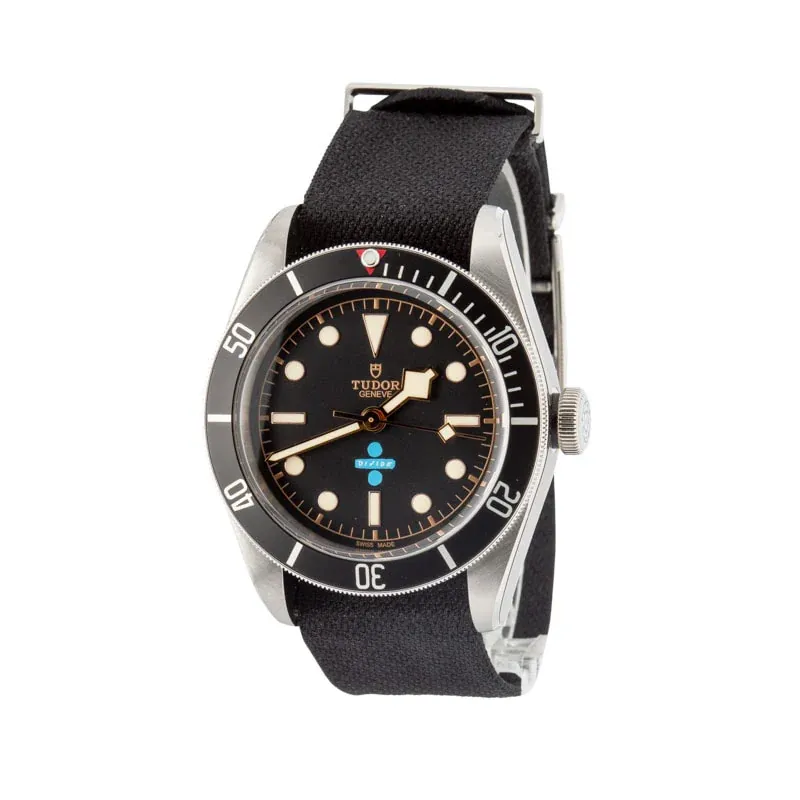
It's one of the most common questions in watches: should you buy a Tudor or save for a Rolex? The two brands share a founder — Hans Wilsdorf created both — and a great deal of engineering philosophy. But they're built for different buyers. Here's how they really compare.
It is worth saying up front that this is not a quality question with a hidden answer. Both brands build watches that will outlast you if serviced. The real question is what you are paying for beyond the watch itself, and whether that premium buys something you personally value.
Shared heritage
Tudor was founded by Rolex's own founder to offer the reliability of a Rolex at a more accessible price. For decades Tudor used Rolex cases and parts, and the family resemblance is still obvious — the Black Bay clearly echoes the Submariner. That shared DNA is exactly why Tudor is the natural alternative for anyone drawn to Rolex.
The original logic was straightforward. Wilsdorf wanted a watch that carried Rolex's case construction and standards of water resistance but used a bought-in movement, so it could be sold for less without compromising where it mattered. For much of the twentieth century that is precisely what Tudor was: Rolex cases, Rolex crowns, Rolex bracelets, and a reliable third-party movement inside. Tudor divers were issued to several navies during that period, which is where the brand's tool-watch credibility genuinely comes from rather than from marketing.
The modern era changed the arrangement significantly. Tudor now designs and manufactures its own movements, and the brand has developed a visual identity that is no longer simply a quieter Rolex. The heritage connection remains real, but Tudor today stands on its own engineering rather than borrowing.
Side by side
| Tudor | Rolex | |
|---|---|---|
| Founder | Hans Wilsdorf | Hans Wilsdorf |
| Movements | In-house MT56xx family, chronometer-certified, plus some sourced calibers | In-house throughout, Superlative Chronometer certified |
| Design language | Vintage-inspired, adventurous, varied | Refined, consistent, slow to change |
| Range breadth | Focused, mostly sports-led | Broad, sports and classic |
| Precious metals | Limited use | Extensive — gold and platinum lines |
| Retail availability | Generally straightforward | Popular steel models often waitlisted |
| Brand recognition | Strong among enthusiasts | Universal |
| Resale | Solid for the price | Market benchmark |
Movements
Modern Tudor makes its own in-house, chronometer-certified movements with long power reserves — genuinely excellent engines. Rolex movements are the industry benchmark for robustness and are backed by the brand's Superlative Chronometer certification. Both are dependable for a lifetime; the gap here is smaller than the price difference suggests.
The Tudor MT56xx family is the heart of the current lineup: in-house, COSC chronometer-certified, with a power reserve long enough that a watch taken off on Friday evening is still running on Monday morning. That last detail is a real quality-of-life feature and one Tudor arrived at early. Some Tudor references still use sourced calibers, and there is nothing wrong with that — a well-made third-party movement is not a compromise — but if in-house matters to you, check the specific reference rather than assuming.
Rolex's advantage is less about raw specification and more about the depth of its testing regime and the maturity of its service network. Its movements are tested after casing rather than in isolation, which is the harder and more meaningful test. In practice, both brands produce watches that keep excellent time and tolerate daily abuse. If you want to understand what these certifications actually measure, our guide to watch movements breaks it down.
Finishing is where a small, honest gap shows. Rolex bracelets, clasps and case surfaces are held to a level of consistency that is genuinely difficult to match, and the difference is most visible in the details you notice over years of ownership — clasp action, bracelet taper, the crispness of a polished bevel. Tudor has closed much of this distance, but it has not closed all of it.
Design and range
Rolex offers a broader catalog and a more polished, universally recognized aesthetic. Tudor leans more vintage-inspired and adventurous, with bold colors and dive-watch character. If you want instantly recognizable prestige, Rolex; if you want distinctive style and value, Tudor.
In practice this means Tudor is often the more interesting brand to browse. Black Bay variants in burgundy, blue and black, the Pelagos in titanium with its purposeful matte finish, the field-watch Ranger, and the Royal and 1926 lines for dressier wear give the catalog real variety. Rolex, by contrast, changes carefully and incrementally — which is exactly why a Datejust looks correct in any decade and why the designs are so hard to date at a glance.
Range breadth is the other honest difference. Rolex covers dress watches in precious metal, annual-calendar and dual-time complications, and a full spread of professional models. Tudor's catalog is narrower and more sports-oriented. If you specifically want a gold dress watch or a travel complication, Rolex has options Tudor does not — though Omega, Longines and IWC are all worth considering in those categories too.
Price
This is the decisive factor for most people. A Tudor typically costs a fraction of a comparable Rolex. A Black Bay delivers the spirit and much of the substance of a Submariner for far less — money you could put toward a second watch, or simply keep.
The more useful way to frame it is opportunity cost. For the price of one entry-level steel Rolex on the secondary market you could own a Tudor diver and still have budget left for a dress watch or a chronograph from another brand. Whether that is a better outcome depends entirely on whether you want one watch you consider definitive or a small collection with range. Neither answer is more sophisticated than the other. If budget is the binding constraint, our roundup of the best luxury watches under $5,000 puts both brands in wider context.
Do not forget the running costs either. Servicing a mechanical watch is a recurring expense on both sides, and insurance premiums scale with value. A watch that fits comfortably inside your budget is a watch you will actually wear rather than protect.
Resale and availability
Rolex leads the resale market: strong demand and excellent value retention, though popular steel models are famously hard to buy at retail. Tudor holds value well for its price and is far easier to actually acquire. On the pre-owned market, both are readily available and — bought from a specialist — fully authenticated.
Two practical points follow from this. First, because Rolex retail supply is constrained on the models people most want, the pre-owned market is where the majority of buyers transact, and paying a secondary-market price is normal rather than a failure to find a dealer. Second, Tudor's easier availability means you have more negotiating room and more choice of condition, which is a genuine advantage when you are being fussy about a specific dial color or bracelet.
If value retention is high on your list, it is worth reading our piece on the best luxury watches for investment before deciding. The short version: Rolex is the more liquid asset, but liquidity is only valuable if you intend to sell, and most people do not.
Buying either brand pre-owned
The checks are much the same for both. Confirm the reference number matches the watch in front of you and the paperwork. Look for over-polishing — softened case edges and thinned lugs are hard to reverse. Ask what has been replaced and whether replacements are genuine factory service parts. Test the bezel action, the crown threading and the clasp. Ask for the service history and take vagueness as a warning rather than an inconvenience.
Bracelets deserve a specific look on older examples of either brand. Hold the bracelet horizontally from the clasp and watch for sag and lateral play; worn links are a common and surprisingly expensive fault. Check that the clasp closes with a definite, confident action rather than a loose one, and that any micro-adjustment mechanism still holds position. On a diver from either brand, ask whether the watch has been pressure-tested recently — water resistance is a property of gaskets that age, not a permanent specification stamped on the caseback.
One check is specific to older Tudor. Because vintage Tudor watches were built with Rolex cases, crowns and bracelets, those components are interchangeable enough that mismatched examples are common — a case from one watch, a bracelet from another, a dial that was never originally paired with either. Confirm that the Rolex-signed parts are consistent with the reference and the period rather than simply present, and treat an unusually cheap vintage Tudor as a reason to ask more questions rather than fewer.
Both brands are counterfeited, Rolex most of all, and the fakes have improved. Our guide to spotting a fake luxury watch covers the tells, and how to buy a pre-owned luxury watch covers the process end to end. The single most effective protection remains buying from a seller who guarantees authenticity in writing and will take the watch back if anything is wrong. Ours is set out in our Authenticity Guarantee and refund policy.
Living with each one
Day to day, the ownership experience is more similar than the price gap implies. Both are built to be worn rather than admired, both use sapphire crystals and screw-down crowns across their sports lines, and both are robust enough that a knock against a doorframe is an annoyance rather than a disaster. Servicing is available through official channels for both, and competent independent watchmakers handle both routinely.
Where you will feel the difference is in attention. A Rolex draws comment from people who know nothing about watches; a Tudor draws comment from people who do. Some buyers want the first and some actively prefer the second, and it is worth being honest with yourself about which camp you fall into, because it is a genuine part of what the premium buys. Whichever you choose, the practical maintenance is the same and our watch care guide covers it.
The verdict
- Buy Rolex if maximum prestige, brand recognition, and blue-chip resale matter most, and the budget allows.
- Buy Tudor if you want most of the Rolex experience — build quality, heritage, in-house movements — at a much friendlier price, with more availability and distinctive style.
One more way to settle it: ask whether you would still want the watch if the name on the dial were unreadable. If the answer is yes for the Tudor, buy the Tudor and enjoy the money you did not spend. If the Rolex is the one you keep coming back to, save for it rather than buying something close and quietly wishing you had waited. Substitution rarely satisfies anyone who has already decided what they want. If you want a fuller breakdown of the Rolex catalog before choosing, our Rolex buying guide walks through every core collection.
There's no wrong answer. Explore both — the Rolex collection and the Tudor collection — each certified authentic, inspected, and backed by our guarantee. You can also compare across the wider catalog or contact us for help sourcing a specific reference.