
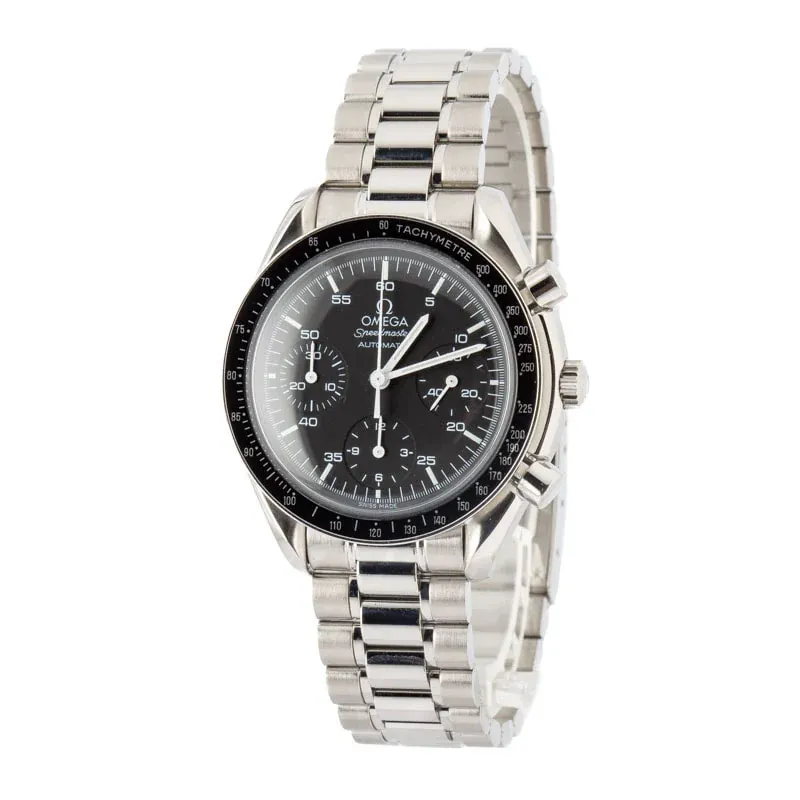
In watchmaking, a "complication" is any function beyond simply telling the time. They're the features that turn a watch into a fascinating mechanical instrument — and understanding them helps you buy the right one. Here's a plain-English guide to the ones you'll actually encounter, what they cost you in practice, and which ones earn their place on a wrist.
How complications are built
A complication is not software. Every extra function is a physical addition — more wheels, levers, springs and cams sharing the same energy from the same mainspring. That single fact explains why complicated watches are thicker, cost more to service, and ask you to be careful about when you adjust them.
There are broadly two ways to add a function. A module is a separate mechanism stacked on top of an existing base caliber: cheaper to develop, often easier to service, and it adds height. An integrated complication is designed into the movement from the start, which usually means a slimmer watch and a higher price. Neither is inherently right, but it is worth knowing which you are buying, especially in a chronograph. For the underlying mechanics, start with our guide to watch movements.
Date and day-date
The most common complication: a small window showing the date, and sometimes the day of the week spelled out (as on the Rolex Day-Date). Simple, useful, and on the majority of luxury watches.
Underneath is a 31-tooth date ring advanced once every 24 hours by a finger driven off the hour wheel. Because it does not know how long a month is, you reset it by hand at the end of any month shorter than 31 days — five times a year. Almost all modern watches have a quickset, letting you advance the date from an intermediate crown position rather than spinning the hands round twelve hours at a time.
Two variations are worth recognizing. A pointer date uses a central hand sweeping a ring of numbers around the dial edge — elegant, and easier to read than a small window. A big date splits the display across two discs to show larger numerals, a more complex mechanism than it looks.
One habit applies to every dated watch: avoid changing the date while the hands are in the hours either side of midnight. The change-over mechanism is engaged during that window, and forcing the quickset against it is a common cause of damage. Move the hands to a mid-afternoon position first. Our care guide covers this and the rest of the ownership basics.
Chronograph
A chronograph is a stopwatch built into the watch, operated by pushers on the side of the case. Sub-dials track elapsed seconds, minutes and hours. It's the complication behind legends like the Omega Speedmaster and the Breitling Navitimer. Genuinely useful and endlessly appealing to enthusiasts.
The standard layout uses two pushers: the top one starts and stops the timing, the bottom one resets to zero. Inside, two design choices define the character of the mechanism.
- Column wheel or cam. A column wheel is a small toothed pillar that coordinates the levers as you press the pushers. It is more expensive to make and gives the crisp, light action enthusiasts prize. A cam or shuttle system does the same job more cheaply, with a firmer press.
- Vertical or lateral clutch. This is how the chronograph engages the running gear train. A lateral clutch meshes two wheels sideways, which can make the chronograph seconds hand jump slightly as it starts. A vertical clutch engages by friction from above, starting cleanly and allowing the chronograph to be left running without accelerating wear.
More elaborate versions exist. A flyback chronograph resets and restarts from a single press while running, designed for navigation timing. A split-seconds or rattrapante adds a second hand that can be stopped independently to record a lap time, then snapped back into sync with the first.
The scale usually paired with a chronograph is a tachymeter: time an object over one measured mile or kilometer and the scale reads off the average speed directly. Neither it nor the telemeter scale is a complication in itself — they are printed markings — but they are part of the chronograph's character. Our comparison of the Speedmaster and Seamaster covers what living with one is actually like.
GMT / dual time
A GMT complication adds a second time zone via an extra hand and a 24-hour bezel or scale — perfect for travelers and anyone who works across time zones. The Rolex GMT-Master II is the archetype, with its two-color bezel to distinguish day from night in the second zone.
There are two mechanically different kinds, and the distinction matters more than any line on the spec sheet.
- A true GMT, sometimes called a flyer or traveler GMT, lets you jump the local hour hand forward or back in one-hour steps without stopping the watch or disturbing the minutes. The 24-hour hand keeps running on home time. This is what you want if you actually fly — you land, click the hour hand to local time, and you're done.
- A caller GMT, or office GMT, does the opposite: the local hands are fixed and you adjust the independent 24-hour hand instead. This suits someone who stays put and tracks a colleague or family member in another zone. It is a simpler and usually cheaper mechanism.
With a rotating 24-hour bezel you can read a third zone as well, by turning the bezel to offset the GMT hand. A world timer goes further, ringing the dial with twenty-four city names against a 24-hour disc so every zone is visible at once. A GMT is the most useful complication for a one-watch traveler, which is why it comes up so often in our pre-owned buying guide.
Moonphase
A moonphase display tracks the lunar cycle with a small rotating disc — pure romance rather than practicality. It's one of the most beautiful complications and a hallmark of classic dress watches.
The standard version uses a disc carrying two moons, advanced one step per day by a 59-tooth wheel — twice the roughly 29.5-day lunar month, so one moon shows while the other is hidden. The true synodic month is about 29.53 days, so this arrangement drifts and needs correcting every couple of years. High-precision moonphases use a finer gear train to stretch that error out to something on the order of a century. A moonphase asks nothing of you day to day, and it pairs naturally with a calendar — which is why so many classic Patek Philippe and Longines dress pieces combine the two.
Annual and perpetual calendar
These track the date intelligently. An annual calendar knows the length of every month except February; a perpetual calendar accounts for leap years too and, in theory, never needs adjusting for centuries. Perpetual calendars are among the most prestigious complications, and brands like Patek Philippe are masters of them.
Between the plain date and the annual calendar sits the complete calendar, often called a triple calendar: day, date and month, usually with a moonphase, but with no knowledge of month length. It needs correcting five times a year like a simple date, and is considerably more affordable than the intelligent calendars.
An annual calendar needs one correction a year, at the end of February. A perpetual calendar carries a mechanical memory of the four-year leap cycle — typically a 48-month cam — and requires no correction until 2100, when the Gregorian calendar skips a leap year the mechanism expects. Perpetuals demand real care: if the watch stops, resetting it is a sequenced procedure, and adjusting anything during the hours around midnight risks serious damage. Many owners keep one on a winder for precisely that reason.
Power reserve indicator
A gauge showing how much wind is left in the mainspring before the watch stops — handy on manual-wind pieces and watches you don't wear daily.
It tracks how far the mainspring barrel has unwound relative to the winding, usually through a small differential gear, and shows the result on a sub-dial or arc. It is most valuable on a hand-wound watch, where it tells you whether the day's winding was enough. On an automatic worn daily it is closer to decoration — the mainspring simply stays near full.
Tourbillon
The showpiece. A tourbillon is a rotating cage that houses the escapement to average out the effects of gravity on accuracy. Today it's admired more as a feat of hand-finishing and mechanical artistry than for real-world precision — and it commands serious prices.
The logic dates from the pocket-watch era, when a watch sat vertically in a waistcoat pocket all day in one orientation, so positional error accumulated in one direction. Rotating the entire escapement, typically once a minute, averaged that error away. A wristwatch already changes position constantly, so it gets much of that averaging for free — which is why a tourbillon is best understood as craftsmanship on display rather than an accuracy upgrade.
Complications at a glance
| Complication | What it does | Everyday usefulness | Owner attention needed | Effect on price and service |
|---|---|---|---|---|
| Date | Shows the day of the month | High | Correct after short months; avoid the midnight window | Minimal |
| Day-date | Adds the weekday in full | High | Same as the date | Small |
| Chronograph | Built-in stopwatch | Moderate to high | Avoid leaving lateral-clutch types running | Noticeably higher service cost |
| GMT / dual time | Second time zone | High for travelers | None | Modest |
| Moonphase | Tracks the lunar cycle | Low | Correct every couple of years | Modest |
| Annual calendar | Knows every month but February | Moderate | One correction a year | High |
| Perpetual calendar | Handles leap years too | Moderate | Careful sequenced setting; best kept running | Very high |
| Power reserve | Shows the remaining wind | Moderate on manual wind | None | Modest |
| Tourbillon | Rotating escapement cage | None practical | None | Very high |
Other complications worth knowing
- Alarm. A second mainspring drives a hammer against the case or a gong at a set time. Rare, characterful, and useful as a travel reminder.
- Retrograde display. A hand that sweeps an arc and snaps back to the start rather than completing a circle. Visually dramatic, and demanding on the spring that returns it.
- Jump hour. The hour appears as a numeral in a window that changes instantly on the hour, rather than being shown by a hand.
- Minute repeater. On demand, chimes the hours, quarters and minutes on tiny gongs. The most difficult traditional complication to execute well, and judged by ear as much as by eye.
Worth noting: a rotating dive bezel is not a complication, because nothing inside the movement drives it. It is still one of the most useful things you can put on a watch, as our dive watch buying guide explains.
What complications cost you in practice
- Thickness. Modules and calendar works add height. A chronograph that measures a comfortable 41mm across can still sit tall enough to catch a cuff.
- Service cost. More parts means more labor. A chronograph service typically costs meaningfully more than a time-and-date service from the same brand, and a perpetual calendar more again.
- Water resistance. Extra pushers and correctors mean extra openings in the case. Many complicated watches are rated for splashes rather than swimming.
- Fragility of setting. Calendar mechanisms have windows during which they must not be adjusted — the most common way owners damage a complicated watch.
- Resale. Simple, iconic complications hold demand best. Highly complex pieces sell to a narrower audience, a point our guide to watches as investments looks at more closely.
Which complications are worth it?
For most buyers, a date and perhaps a chronograph or GMT hit the sweet spot of usefulness and appeal. Moonphases and calendars are for lovers of classic elegance; tourbillons are for collectors chasing haute horlogerie. Buy the complications you'll actually use and enjoy — and buy them authenticated. Explore the collection or browse by brand.
A useful way to decide is to think about how the watch fits your week rather than how impressive it reads on paper. If you fly regularly, a true GMT from Rolex, Tudor or IWC earns its place on every trip. If you love the history of aviation and racing instruments, a chronograph from Breitling or Omega makes sense even if you never time anything with it. If what moves you is the finishing, a moonphase or calendar from a house like Patek Philippe or Audemars Piguet keeps rewarding you long after the novelty of a stopwatch fades. The wrong answer is buying a complication because it sounds expensive.