
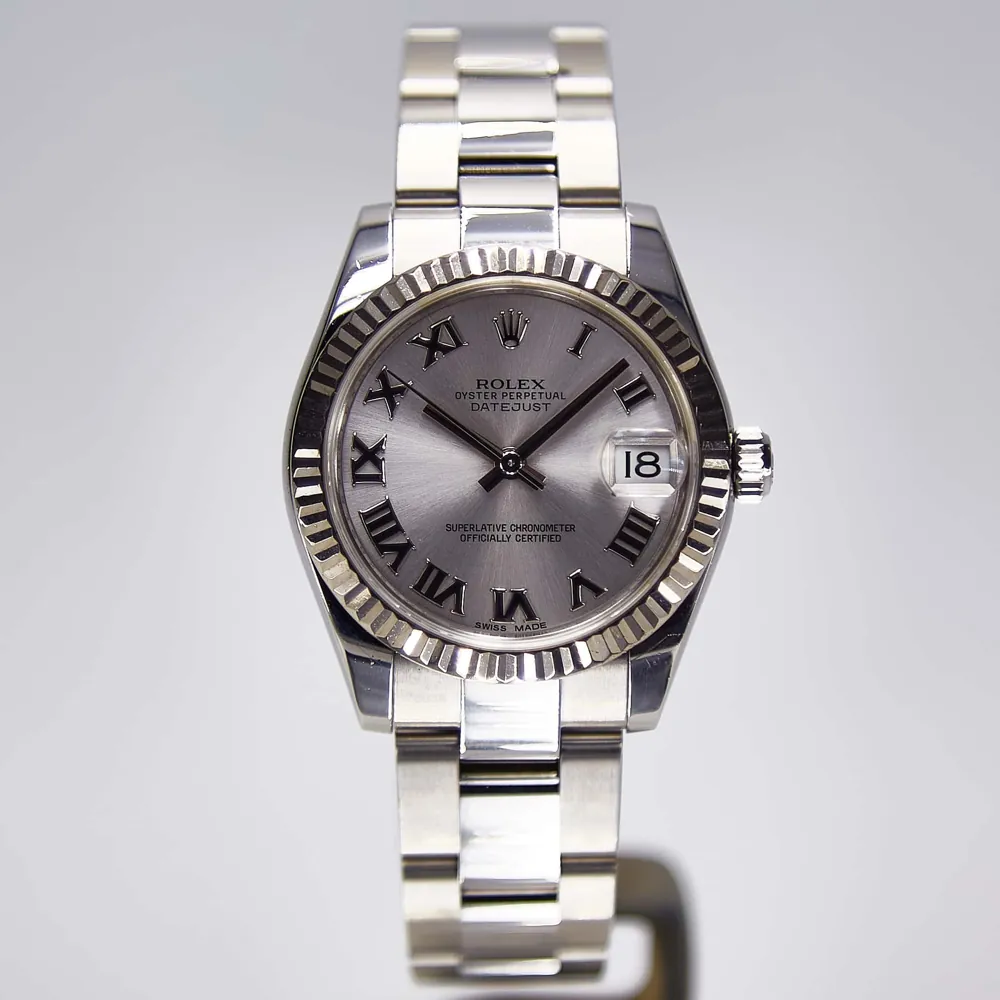
A fine watch is built to last generations — but only with a little care. The good news is that keeping a luxury watch healthy is simple. Here's everything you need to know to protect your investment and keep it running beautifully.
Service it on schedule
Mechanical watches (automatic and manual) need a professional service roughly every 5–10 years. Over time the lubricants inside dry out; a service cleans, re-oils and regulates the movement and replaces worn seals. Skipping servicing is the most common cause of accuracy problems and expensive damage. Quartz watches simply need a fresh battery when they stop.
It is worth knowing what a full service involves, because it explains both the cost and the interval. The watchmaker strips the movement to individual components, cleans them, inspects the pivots and jewels for wear, replaces anything worn, reassembles with fresh lubricants specified for each contact point, then regulates the watch in multiple positions. The case is refitted with new gaskets and pressure-tested. That is many hours of skilled labor, which is why servicing a complicated watch costs considerably more than a simple time-and-date piece — see our guide to watch complications.
The old advice to service every five years without fail comes from an era of natural oils. Modern synthetic lubricants last longer, and many watchmakers now suggest servicing on evidence rather than the calendar: if the watch keeps good time, winds smoothly and still holds pressure, there is little to gain from opening it. The exception is water resistance — if you swim with your watch, have the seals tested annually regardless.
A practical maintenance schedule
Here is a realistic routine for a watch in regular wear.
| Interval | What to do | Why it matters |
|---|---|---|
| Daily | Wipe the case and bracelet with a soft dry cloth; check the crown is screwed down | Removes skin oils and salt; an unscrewed crown is the leading cause of water ingress |
| Weekly | Compare against an accurate reference and note the rate; wind a manual watch fully | A sudden change in rate is the earliest warning of magnetism |
| Monthly | Rinse a water-resistant bracelet in lukewarm water; inspect the clasp, spring bars and link screws | Grit accumulates in the links, and loose spring bars are how watches end up on the floor |
| Every 6 months | Inspect a leather strap for cracking at the lugs; check for play in the end links | Straps fail at the fold points long before they look worn |
| Annually | Pressure-test the seals if you swim with the watch; have the timekeeping checked on a timing machine | Gaskets harden with age and heat, and do so silently |
| Every 2–3 years | Replace a quartz battery promptly when it stops; renew gaskets on a watch used in water | A dead cell left in the case can leak and damage the movement |
| Every 5–10 years | Full professional service | Restores lubrication, accuracy and water resistance before wear becomes damage |
| As needed | Demagnetize if the watch suddenly gains time; refinish the case only when you truly want to | Demagnetizing is quick and harmless; polishing is irreversible |
Adjust the intervals to how you live: a watch worn in an office needs less attention than one worn on a boat or in a workshop.
Understand your water resistance
Water resistance ratings are a guide, not a promise forever — gaskets age. As a rule: 30m resists splashes only; 50–100m handles swimming; 200m+ is fine for diving. Never operate the crown or pushers underwater, and always ensure a screw-down crown is fully tightened before any contact with water. Have the seals tested at each service if you swim with your watch.
The ratings are conservative for a reason: they are established in static laboratory conditions, whereas moving your arm through water briefly generates pressures well above the depth you are actually at. Anything you plan to dive with should meet the dedicated dive watch standard, which adds requirements for legibility, a timing bezel and shock resistance — our dive watch buying guide covers it.
Two everyday habits do more damage than deep water. The first is hot showers and saunas: heat softens the gaskets and steam penetrates where liquid water would not. Take the watch off. The second is salt water and chlorine, which attack gaskets over time — rinse the watch in fresh water afterward, crown screwed down, and dry it thoroughly. Dive watches from Omega, Tudor and Rolex are built for this, but the rinse still matters. And if you ever see condensation under the crystal, get the watch to a watchmaker quickly — moisture inside the case begins corroding the movement within days.
Keep it away from magnets
Magnetism is a hidden enemy of mechanical watches — it can cause them to run fast. Everyday culprits include laptop speakers, phone cases with magnetic closures, and tablet covers. If your watch suddenly gains several minutes a day, magnetism is the likely cause, and a watchmaker can demagnetize it in minutes. Many modern movements (like Omega's Master Chronometer calibers) are highly anti-magnetic.
The mechanism is straightforward. The hairspring is a fine coil, and if its turns become magnetized they cling to one another. A shortened effective hairspring beats faster, so the watch gains — often minutes a day rather than seconds. Nothing is broken, and demagnetizing usually restores the original rate immediately.
The sources have multiplied lately: magnetic phone mounts and chargers, tablet covers, wallet closures, headphones. Modern defenses include soft-iron inner cases, silicon hairsprings that are inherently non-magnetic, and paramagnetic alloys of the kind used by Rolex and Omega.
Store it properly
When you're not wearing it, keep your watch in a soft-lined box away from heat, humidity and direct sunlight. If you own several automatics, a watch winder keeps them wound and ready — useful for watches with calendars you'd otherwise have to reset. Store watches with their crowns screwed down.
Sunlight is the most underrated threat in storage: prolonged exposure fades dials, discolors luminous material and dries out leather and rubber. A drawer or closed box solves it. An airing cupboard, a car glovebox and a sunny window sill are all bad homes for a watch.
On winders, the enthusiast debate is genuine. One is worth having if you own a perpetual calendar or another watch that is tedious to reset. With two or three simple automatics, winding them by hand as you put them on works just as well and puts less running time on the movement. For long-term storage, let a mechanical watch run down and store it flat, dial up, somewhere dry — then take it out once or twice a year, wind it gently and let it run for a day so the lubricants redistribute.
Clean it gently
Wipe the case and bracelet with a soft, dry (or very slightly damp) cloth to remove skin oils and dust. For a water-resistant watch with a metal bracelet, a soft toothbrush and lukewarm soapy water clean the links well — just make sure the crown is screwed down first. Avoid harsh chemicals and ultrasonic cleaners unless a professional handles it.
Work through the bracelet in sections, paying attention to the underside of the clasp and the gaps between links where grime collects. Rinse, dry with a lint-free cloth, and let the watch sit for an hour before wearing it so trapped water evaporates.
Leather needs the opposite approach. Keep it dry, keep it away from soap, and accept that a leather strap is a consumable — it will need replacing periodically, and much sooner if you sweat into it.
Wear it — and handle it well
Watches are happiest being worn; regular wear keeps automatics running and lubricants moving. That said, take it off for heavy manual work, contact sports, or anything involving hard knocks and chemicals. Set the date only during the day (avoid the "danger zone" around midnight when the date mechanism is engaged).
Golf, tennis and weight training deserve a mention. The problem is not usually a knock but the sharp deceleration, which can be violent enough to damage a balance staff even though nothing visibly hit the watch. Perfumes, sunscreen and insect repellent are the other hazards — they attack leather, gaskets and sometimes case finishes. Put the watch on last.
Set it correctly
Most owner-inflicted damage happens during setting rather than wearing, so a routine is worth learning.
- Unscrew the crown fully if it screws down, and support the watch in your hand rather than setting it on your wrist.
- If the watch has stopped, wind it about thirty turns before setting anything, so the calendar work is driven with proper force.
- Move the hands to a mid-afternoon position, clear of the midnight change-over window, before using any quickset date or day function.
- Set the date, then the day, then advance the hands to the correct time, passing midnight once if the date needs to roll forward.
- Turn the hands clockwise wherever you can. Winding backward past a date change is where calendar mechanisms most often get hurt.
- Push the crown fully home and screw it down. Check it, then check it again — this single step prevents most water damage.
On a chronograph, reset the timing hands to zero before setting the time, and don't leave a lateral-clutch chronograph running as a seconds display.
Bracelets, straps and fit
A watch that fits properly is safer and more comfortable. It should sit snugly enough not to slide over the wrist bone but loosely enough to move a little — wrists swell over the day, so aim for the fit you want in the afternoon rather than the morning. Many modern clasps include a micro-adjustment that lets you fine-tune without removing links; use it. Check the spring bars whenever you change a strap: they are inexpensive, they do wear, and a failed spring bar is the most common way a watch ends up on a hard floor.
Crystals, scratches and polishing
Almost every modern luxury watch uses a sapphire crystal, which resists scratching from nearly everything you meet day to day, though it is brittle enough that a sharp impact on the edge can chip it. Vintage and heritage-styled watches sometimes use acrylic, which scratches easily but polishes back to clarity in minutes.
Case and bracelet scratches are a different question, and the honest advice is to be conservative. Polishing removes metal. Repeated refinishing softens the sharp edges and bevels that define a case's shape, and over-polished cases are permanently diminished — experienced buyers spot them instantly, and they hurt resale. A light refinish by a specialist who understands where the brushed and polished surfaces meet is fine once in a long while; polishing at every service is not. Learning to recognize an over-polished case is a valuable skill, and one our guide to buying pre-owned touches on.
Traveling, paperwork and insurance
When you travel, keep the watch on your wrist or in your carry-on, never in checked luggage, and use a padded roll rather than letting it move loose in a bag.
Care is not only physical. Keep the box, warranty card, receipt and any service invoices together — a complete set helps resale value and makes an insurance claim far simpler. Photograph the watch from several angles and record the reference and serial numbers somewhere separate from the watch itself. Check that your home insurance covers it away from the house, since many standard policies do not by default. Our notes on watches and value retention cover why documentation matters so much on resale.
Signs your watch needs attention
- A sudden change in daily rate, particularly gaining several minutes — usually magnetism, and quick to fix.
- A power reserve shorter than it used to be, suggesting dried lubricants or a tired mainspring.
- Gritty or inconsistent winding, or a crown that no longer screws down smoothly.
- Condensation or dust under the crystal — treat this as urgent.
- A seconds hand that stutters, or a rotor you can hear grinding rather than gliding.
- A date that changes lazily over several hours instead of snapping over at midnight.
None of these mean disaster, but all mean a watchmaker should look at the watch before a small problem becomes an expensive one.
Buy right in the first place
Good care starts with a healthy watch. Every timepiece we sell is inspected to confirm it's keeping accurate time before it ships, and covered by our 2-year warranty and Authenticity Guarantee. Looking to add to your collection? Explore the collection, browse by brand, or get in touch if you'd like advice on a specific piece.