
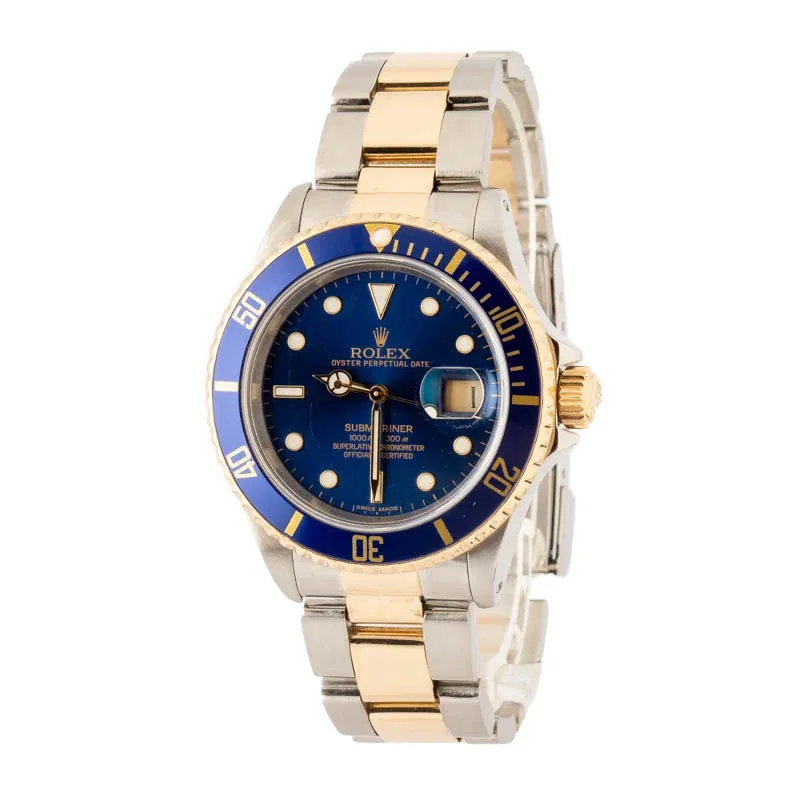
Buying a pre-owned luxury watch is one of the smartest ways to own a genuine Swiss (or Japanese) timepiece. You avoid the steep first-owner depreciation, gain access to discontinued and vintage references, and — with the right seller — get a watch that has been inspected and guaranteed authentic. This guide walks you through the entire process, step by step.
Nothing below requires you to become an expert. It requires you to ask better questions than the average buyer, and to buy from someone who welcomes them.
1. Why buy pre-owned?
A new luxury watch can lose a substantial share of its retail price the moment it leaves the boutique, much like a new car. Pre-owned buyers skip that initial drop. Just as importantly, the secondary market is the only place to find sold-out and vintage references — many of the most desirable watches in the world are no longer in production. A carefully chosen pre-owned piece can hold its value, and in some cases appreciate.
There is a second advantage that gets less attention: availability. Several of the most requested steel sports models are effectively impossible to buy at retail without a long relationship with an authorized dealer, and even then the wait can run for years. The pre-owned market has no waitlist. If the watch exists, it can be bought today.
2. Set a realistic budget
Decide on an all-in number before you start browsing. Remember that the sticker price isn't the only cost — factor in potential servicing (a full mechanical service runs several hundred dollars every 5–10 years) and, if you're importing, any duties. At WatchDealHub.com, shipping is free and fully insured, and every watch is inspected before it ships, so there are no surprise refurbishment costs.
As a rough guide: capable entry-level Swiss automatics start under $2,000, iconic sports models sit in the $5,000–$15,000 range, and grail-level pieces climb well beyond that. Browse the full collection and filter by price to see what your budget buys.
A useful discipline is to hold back part of your budget rather than spending every dollar on the watch itself. Buyers who spend to the last dollar tend to postpone maintenance, and postponed maintenance is how a good watch becomes an expensive one.
Here is how the broad tiers tend to break down in practice:
| Budget | What it typically buys | Brands worth studying |
|---|---|---|
| Under $1,500 | Swiss automatics, capable chronographs, strong entry-level finishing | Tissot, Hamilton |
| $1,500–$5,000 | Serious daily-wear Swiss watches, in-house movements, dive and pilot icons | Longines, Oris, Tudor |
| $5,000–$15,000 | The benchmark steel sports references and established chronographs | Rolex, Omega, Breitling, Panerai |
| $15,000 and up | Precious metals, complications, integrated-bracelet grails | IWC, Audemars Piguet, Patek Philippe |
If your budget sits at the lower end of that table, our guide to the best luxury watches under $5,000 covers the strongest options in detail.
3. Choose the right brand and model
Start with how you'll wear it. A daily do-everything watch, a dress watch for formal occasions, and a dive watch for the water are very different tools. A few reliable starting points:
- Do-it-all icons: the Rolex Datejust and Submariner, or the Omega Seamaster.
- Best value in Swiss luxury: Tudor (shared heritage with Rolex, in-house movements) and Longines.
- Collector grails: the Patek Philippe Nautilus and Audemars Piguet Royal Oak.
Research the specific reference number, not just the model name — small differences in dial, bezel, or movement can mean big differences in price and desirability.
Beyond those starting points, it helps to think in categories rather than brands. Pilot watches — the territory of IWC and Breitling — favor legibility and large, high-contrast dials. Cushion and square cases from Panerai and Bell & Ross wear very differently from round ones and are worth trying on before committing. Grand Seiko makes a strong case for anyone who cares more about dial texture and hand-finishing than about brand recognition, and Oris delivers genuine mechanical substance without a luxury premium.
One practical filter narrows the field faster than any amount of browsing: decide whether you want a bracelet or a strap, because that choice changes how a watch wears more than a couple of millimeters of case diameter ever will. If you want to go deeper on a single brand before choosing, our Rolex buying guide is a good place to start, and if you are set on something water-ready, read the dive watch buying guide.
4. Understand what's inside the case
Two watches that look similar can be built very differently, and the movement is usually where the money went. Automatic movements wind themselves from the motion of your wrist and are the default in modern luxury watches. Manual-wind movements need a daily turn of the crown, which some owners enjoy and others find tedious. High-grade quartz exists at the luxury level too and is not a lesser choice — it is simply a different one, with better accuracy and far less maintenance.
What you should check before buying is whether the movement is in-house or sourced, whether it is chronometer-certified, and what its power reserve is. In-house movements can be more expensive to service but often support value better; well-established sourced calibers are easier and cheaper for any competent watchmaker to maintain. Neither is automatically superior. Our guide to watch movements explained breaks down the differences in plain language.
5. Verify authenticity — this is non-negotiable
Counterfeits have become extremely convincing. Never buy on looks alone. A trustworthy seller will confirm the watch is 100% authentic in writing and stand behind that guarantee. Check the movement, dial printing, serial and reference numbers, weight, and finishing. Our dedicated guide, How to Spot a Fake Luxury Watch, covers the exact checks — and every watch we sell is backed by our Authenticity Guarantee.
Be aware that authenticity is not only a question of real versus fake. The market also contains genuine watches assembled from mismatched parts, replacement dials fitted during past services, and aftermarket bezels or bracelets on otherwise correct watches. None of that makes a watch worthless, but all of it affects value, and it should be disclosed rather than discovered. Ask directly whether every component is original to the reference, and expect a straight answer in writing.
6. Assess condition and service history
Ask about the watch's condition honestly: are there scratches, is the crystal original, has it been polished (over-polishing rounds off crisp case edges and hurts value), and when was it last serviced? A watch that is running within accuracy tolerances and has clean, sharp lines is worth more than one that merely "looks fine" in photos. We photograph the exact watch you'll receive — never stock images — so you can judge condition for yourself.
When you look at listing photographs, look at the case from the side rather than straight down. That angle shows whether the bevels between the top of the lugs and the flanks are still crisp, which is the clearest evidence of whether a case has been polished repeatedly. Also look at the bracelet held horizontally: significant sag indicates stretch in the links, which is wear you cannot polish out.
- Light wear — hairlines on the clasp and case back, sharp case edges, no visible dents. Normal, and easily lived with.
- Honest wear — visible scratches on the case and bracelet, some bezel marks. Often the best value if the case has not been over-polished.
- Refinished — glossy but soft-edged case, thinned lugs. Priced accordingly, and worth avoiding on collectible references.
- Needs work — poor timekeeping, moisture under the crystal, sticky winding. Only worth buying at a price that assumes a full service.
Once the watch is yours, keeping it in that condition is mostly a matter of routine. Our guide on how to care for a luxury watch covers cleaning, water resistance, storage and service intervals.
7. Box, papers, and provenance
"Full set" means the watch comes with its original box and papers (warranty card, booklets). A full set commands a premium and is easier to resell, but a watch without papers isn't necessarily inauthentic — plenty of genuine watches lost their paperwork over the years. What matters most is that authenticity is independently verified. Each listing clearly notes what's included.
How much that premium is worth to you depends on your intentions. If you plan to wear the watch for a decade and pass it on within your family, paying extra for a box and a card is a weak use of budget. As a rule, the older and more collectible the reference, the more the paperwork is worth.
8. Ask the seller these questions
A good seller will answer all of these without hesitation, and the quality of the answers tells you almost everything about the quality of the watch:
- What is the full reference number, and roughly what year is the watch?
- Has the case ever been polished, and if so, when and by whom?
- When was it last serviced, and was the work done by the manufacturer or an independent watchmaker?
- Is every component original to the reference — dial, hands, bezel, crown, bracelet and clasp?
- How is it currently keeping time, and has water resistance been tested?
- What exactly is included, and how many bracelet links come with it?
- What is the warranty, and what does the returns process actually look like?
If any answer is vague, evasive, or contradicted by the photographs, walk away. There will be another example, and our FAQs answer the most common versions of these questions up front.
9. Buy from a seller that stands behind the watch
The single biggest risk in the pre-owned market is the seller, not the watch. Buy from a specialist who inspects every piece, guarantees authenticity in writing, offers a warranty, and provides insured shipping and a fair returns window. That's exactly how we operate: every watch is certified authentic, covered by a 2-year warranty, shipped free and fully insured, and backed by a 14-day return policy.
The main routes to buying each carry a different balance of price and protection:
| Where you buy | Typical advantage | Main risk |
|---|---|---|
| Private sale or forum | Lowest prices | No warranty, no recourse, authentication entirely on you |
| Open marketplace | Wide selection | Variable seller quality; condition often overstated |
| Auction | Access to rare references | Buyer's premium, limited inspection, sold as seen |
| Specialist dealer | Inspected, guaranteed, warrantied, returnable | Modest premium over private sale |
That premium is essentially an insurance policy, and on a four- or five-figure purchase it is cheap. Reading a seller's customer reviews and shipping terms before you commit takes ten minutes and prevents most bad outcomes.
10. The first thirty days after it arrives
Do not put the box away and forget about it. Use your returns window deliberately:
- Check the reference and serial numbers against the listing and any paperwork.
- Wear it normally for several days and track how many seconds a day it gains or loses. Mechanical watches drift; a steady rate matters more than a perfect one.
- Test the winding, the date change, the chronograph pushers and the bezel action, and have the bracelet sized properly.
- Add it to your home insurance or a specialist policy, and photograph it alongside its documents.
If anything is off, say so while the return window is still open. A reputable seller would far rather fix a problem than have an unhappy owner.
Common first-time mistakes
- Buying the brand instead of the watch. A model you find slightly boring does not get more interesting because of the name on the dial.
- Ignoring fit. Lug-to-lug length and case thickness determine how a watch wears far more than the advertised diameter.
- Treating a low price as good news. In a transparent market, a price well below the going rate is a warning, not a bargain.
- Discarding the paperwork you do get. Keep receipts, service records and photographs from day one; they are worth real money later.
The bottom line
Pre-owned is the connoisseur's way to buy: better value, wider selection, and — with the right partner — none of the risk. Set your budget, choose your reference, insist on verified authenticity, and buy from someone who guarantees their watches. When you're ready, explore our certified collection.