
Fine watches are one of the few luxury goods that can be enjoyed daily and retain value. But "investment" is a strong word — most watches are a passion first and a store of value second. Here's an honest look at which pieces have the best track record, and how to think about value without getting burned.
It is worth being clear about what a watch is and is not as an asset. It pays no yield, it costs money to maintain and insure, it can be lost or damaged, and selling it takes time and gives up a margin to whoever buys it. Against that, it is portable, durable, globally recognized, and you can wear it every day of the years you hold it. Treated as the only asset you own, a watch is a poor decision. Treated as a durable luxury that happens to hold its value unusually well, it is one of the more rational ways to spend money on something beautiful.
Do luxury watches actually appreciate?
Some do; most simply hold value well relative to other luxury goods. A small group of iconic references has historically appreciated on the secondary market, driven by scarcity and relentless demand. The majority of watches, however, are best viewed as durable luxury you can wear for decades — not a guaranteed return. Buy what you love first.
The distinction that matters is between value retention and appreciation. Value retention means you can sell in five years for a meaningful share of what you paid, which is true across a wide band of the market and is where most of the practical benefit lies. Appreciation — selling for more than you paid, after costs — has historically been concentrated in a narrow set of references from a handful of brands, and it has never been evenly distributed across time. Markets for collectibles run in cycles, and anyone who tells you which direction the next few years will go is guessing.
The real cost of holding a watch
Before comparing any two watches on value, account for what ownership actually costs. These are the line items people forget:
- Servicing. A mechanical watch needs periodic maintenance, typically every 5–10 years, and the bill for a complicated movement is considerably higher than for a simple one.
- Insurance. Either a rider on your home policy or a specialist policy, priced against the replacement value.
- The buy–sell spread. You buy at retail-adjacent prices and sell at wholesale-adjacent ones. That gap has to be recovered before you are ahead.
- Time. Selling well means waiting for the right buyer. Selling quickly means accepting a lower number.
- Condition risk. Daily wear costs value, while a watch kept pristine in a safe costs you the pleasure of owning it.
None of this argues against buying. It argues for buying watches you will actually wear, at prices that leave room, in references that people will still want when you are done with them.
What drives a watch's value
- Scarcity: limited production, discontinued references, and waitlisted models.
- Brand strength: a handful of names dominate the resale market.
- Iconic design: instantly recognizable, timeless models age best.
- Condition and completeness: unpolished cases and full sets (box and papers) command premiums.
- Provenance: documented history and originality matter to collectors.
Underneath all five sits one quality that is easy to overlook: liquidity. A watch that thousands of people actively want can be sold almost anywhere in the world within days, and that alone supports its price. A rare watch with a handful of interested buyers on the planet may be far more interesting horologically and far harder to turn back into money. For most buyers, liquidity is worth more than rarity.
Design continuity is the other underrated factor. References that have evolved gradually over decades — keeping their proportions and their visual identity while the engineering improves underneath — accumulate a following that spans generations. Designs that changed radically, or that leaned on a passing trend, tend to fall out of demand and stay there.
The blue-chip references
These are the models with the strongest long-term demand:
- Rolex Submariner, GMT-Master II and Cosmograph Daytona — the benchmark for liquidity and value retention. The steel Daytona in particular has a legendary track record.
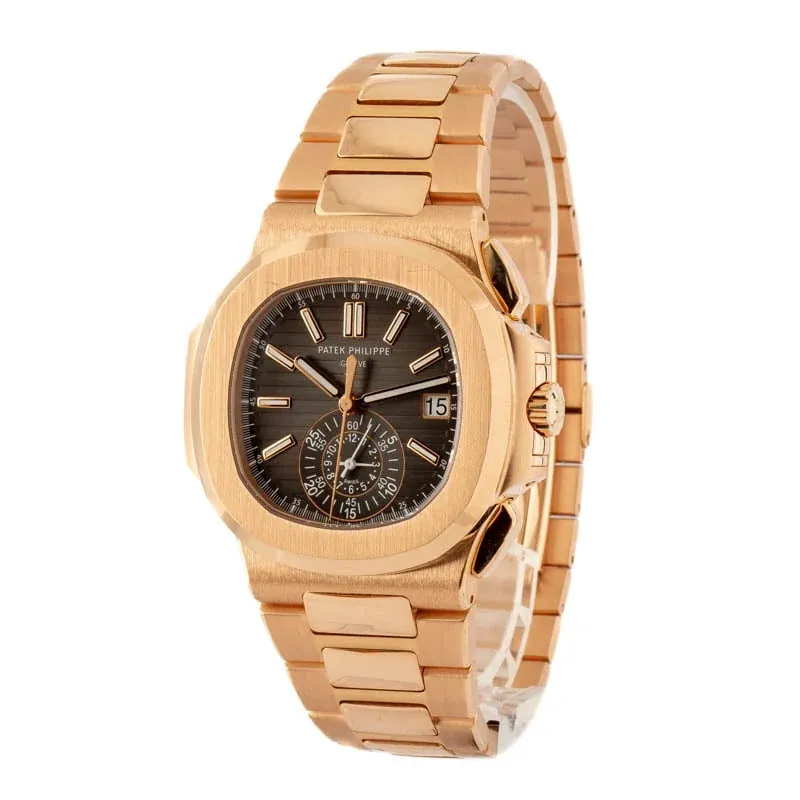
- Patek Philippe Nautilus and Aquanaut — integrated-bracelet sports watches with waitlists that dwarf supply.
- Audemars Piguet Royal Oak — the original luxury sports watch, endlessly in demand.
Why Rolex sets the benchmark
Rolex combines three things almost no other brand has at once: name recognition far outside the watch world, a design language that has changed slowly since the Oyster case was introduced in 1926, and production discipline that keeps the most wanted references scarce at retail. The practical consequence is liquidity. A Submariner or a Datejust can be valued and sold in essentially any major city, which is why these references anchor the wider market. Our Rolex buying guide goes deeper on which references to prioritize, and the Tudor versus Rolex comparison is worth reading if the entry price gives you pause.
The integrated-bracelet grails
The Royal Oak arrived in 1972 and the Nautilus in 1976, both designed by Gérald Genta, and together they established the idea that a steel sports watch could be a luxury object rather than a tool. That category has dominated collector demand for years. The caveat is that categories this fashionable can cool, and buying at the top of a demand cycle is the most common way to lose money in watches regardless of how strong the underlying reference is.
Smart value picks
You don't need a six-figure budget to buy well. These hold value strongly for what they cost:
- Tudor Black Bay — in-house, chronometer-certified movements and iconic dive-watch styling at a fraction of comparable prices.
- Omega Speedmaster Professional — the Moonwatch's history and cult following give it durable demand.
- Vintage Longines and Grand Seiko — craftsmanship that the wider market is only now catching up to.
A few more deserve consideration for anyone building a collection rather than chasing a single name. The Omega Seamaster has the same engineering pedigree as the Speedmaster with a broader everyday use case — our Speedmaster versus Seamaster comparison covers that choice in detail. IWC pilot's watches and Breitling chronographs have deep aviation histories and settled followings. Panerai and Bell & Ross occupy design territory nobody else does, which supports demand among people who want that particular look. At the entry level, Hamilton, Tissot and Oris will not appreciate, but they lose relatively little and are excellent ways to learn what you actually like before committing serious money. Our roundup of the best luxury watches under $5,000 covers that tier in full.
How the tiers compare
| Tier | Liquidity | Realistic expectation |
|---|---|---|
| Blue-chip steel sports references | Very high | Strongest value retention; appreciation possible but never guaranteed |
| Established icons from major brands | High | Holds value well and sells quickly at a fair number |
| Quality Swiss at $2,000–$5,000 | Moderate | Moderate depreciation, limited downside, excellent to wear |
| Precious metal and complications | Lower | Higher entry and service costs; narrower pool of buyers |
| Fashion and trend-driven models | Low | Treat as consumption, not as a store of value |
Steel, gold and complications
Precious metal raises the intrinsic floor of a watch but rarely improves its performance as an asset. Gold and platinum versions of sports references cost substantially more, appeal to a smaller pool of buyers, and tend to give up more of the difference on resale. Steel has repeatedly been the stronger performer in the modern market, for the simple reason that demand for it is broadest.
Complications work the same way. A perpetual calendar or a minute repeater is a genuine feat of engineering and a legitimate reason to buy a watch, but each additional complication narrows the buyer pool and raises the service cost. Chronographs and GMTs are the exceptions — both are useful enough and common enough to have deep, liquid markets of their own. If you want to understand what you would actually be paying for, watch complications explained breaks each one down.
Condition, originality and paperwork
Two identical references can differ enormously in value on condition alone, and the gap widens the older and more collectible the watch is. An unpolished case with its original bevels intact, a dial with no replacement parts, and a full set of box and papers together represent the best case. Every element that is missing or has been altered takes something off.
The practical implications for a buyer are straightforward. Prefer honest wear to a heavily refinished case. Ask whether every component is original to the reference. Keep every receipt, service record and photograph from the day you buy, because complete documentation is worth real money when you sell. And be careful about who services the watch — work done with non-original parts is a permanent mark against value on collectible references. Our guide on how to care for a luxury watch covers the maintenance side properly.
Mistakes to avoid
- Over-paying at hype peaks. Markets move; don't buy a trend at its top.
- Ignoring condition. A polished, serviced-with-generic-parts watch is worth far less than an honest, original example.
- Chasing returns over enjoyment. If you wouldn't be happy wearing it for ten years, it's a speculation, not an investment.
- Buying unverified. A "bargain" that turns out to be a fake or a franken-watch is the most expensive mistake of all.
- Borrowing to buy. Financing an illiquid, non-yielding asset turns a hobby into a leveraged position.
- Concentrating in one reference. A collection spread across categories is far less exposed to a single market swing.
- Forgetting the exit. Ask how you would sell a watch before you buy it, not after.
Thinking about the exit
Every purchase has a sale at the other end, even if it is decades away or handled by someone else. Three questions are worth answering before you commit. How many people want this reference, and where are they? How much of the price is design and history, and how much is a passing moment of attention? And how much will it cost to get the watch into sellable condition when the time comes?
Timing is the part nobody controls. The most reliable approach is to hold long enough that short-term swings stop mattering, and to sell because you want to rather than because you have to. Forced sales are where value gets destroyed. If you are choosing between two watches and one is significantly easier to sell, that is a real advantage even if you never intend to use it.
How to buy for value
Focus on iconic references in honest condition, buy authenticated pieces from a specialist, and hold for the long term. Every watch we sell is certified authentic, fully inspected, and photographed exactly as you'll receive it. Explore our collection or browse the blue-chip brands to start building a collection that's a pleasure to wear and a sound store of value.
Two final safeguards. Authentication is not optional at this level — a counterfeit or an incorrectly assembled watch has no resale value at all, which is why our Authenticity Guarantee exists, and why our guide to spotting a fake luxury watch is worth reading before any large purchase. And process matters as much as selection: the fundamentals in how to buy a pre-owned luxury watch apply just as much to a value-driven purchase as to a first one.