
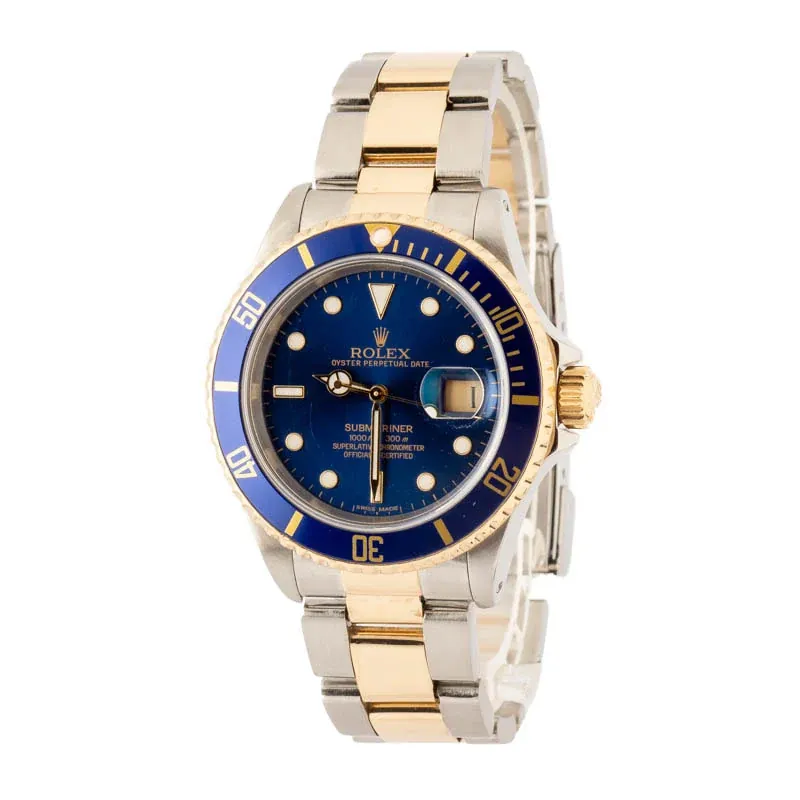
No brand carries the prestige of Rolex. But with a dozen collections and countless references, choosing your first (or next) Rolex can be daunting. Here's a clear guide to the core models and who each one suits.
The aim here is practical. By the end you should know which collection fits your wrist and your week, what the jargon on the dial actually means, how to read a reference number, and what to look at before you hand over money on the pre-owned market. If you are new to buying secondhand entirely, read our guide to buying a pre-owned luxury watch alongside this one.
Why Rolex?
Rolex built its reputation on robustness, precision, and consistency. Every modern Rolex is a certified chronometer, water-resistant, and engineered to last generations. That reliability — combined with unmatched brand recognition — is why Rolex dominates both the wrist and the resale market.
The consistency point deserves emphasis, because it is the least glamorous and most important thing about the brand. Rolex changes its designs slowly and deliberately. A Submariner made decades ago is recognizably the same watch as one made today, and the parts, the servicing network and the collector knowledge base have all had a long time to mature. That continuity is why a Rolex is easy to own for a lifetime and easy to sell if your taste moves on.
It also explains the resale strength. Value retention is not magic — it comes from designs that do not date, production that is disciplined relative to demand, and a name that a non-collector recognizes across a table. If you want to understand how that dynamic plays out across the wider market, our piece on the best luxury watches for investment covers the broader picture. Just do not buy a watch purely as an asset. Buy it because you want to wear it, and treat the value retention as insulation rather than income.
The core collections
- Submariner — the definitive dive watch and the default "one Rolex to own." Timeless, tough, and endlessly versatile from beach to boardroom.
- Datejust — the archetypal everyday luxury watch. Available in many sizes, dials, and bezels, it dresses up or down effortlessly.
- Cosmograph Daytona — the legendary racing chronograph and one of the most coveted watches in the world. Strong demand, strong value.
- GMT-Master II — a travel watch with a second time zone and a two-color bezel. The pilot's icon.
- Day-Date (President) — the flagship dress watch in precious metal, spelling out the day in full. A statement of success.
- Oyster Perpetual — the purest Rolex: no date, no complications, just clean design and bulletproof engineering. Often the best value entry point.
- Explorer & Explorer II — understated adventure watches with superb legibility.
- Sea-Dweller & Deepsea — serious dive watches with extreme depth ratings.
Sports models versus classic models
It helps to split the catalog in two. The Professional or sports side — Submariner, GMT-Master II, Daytona, Explorer, Sea-Dweller, Yacht-Master, Air-King — is built around legibility, luminous markers, rotating or engraved bezels and a tool-watch character. The Classic side — Datejust, Day-Date, Oyster Perpetual, Sky-Dweller — is about dial variety, polished finishing and dressier bracelets. Most buyers already know instinctively which half they belong to. If you wear a suit most days, the classic side will get more wrist time than you expect; if you live in a shirt and jeans, a sports model will simply feel more like yours.
Choosing between the two divers
The Submariner and the Sea-Dweller look similar in photographs and feel quite different on the wrist. The Sea-Dweller and Deepsea are thicker and heavier because of the depth rating and the helium escape valve, which matters far more for daily comfort than it does for actual diving. Unless you specifically want the extra presence, the Submariner is the more wearable of the two. If you are shopping divers across brands rather than just within Rolex, our dive watch buying guide sets out what genuinely matters in the category.
Sizes, materials and bracelets
Rolex case sizes cluster in a narrow, sensible band. Most modern sports models sit in the low forties of millimeters, the Datejust spans a wider range from the mid-thirties upward, and the Oyster Perpetual runs from small to full-size. Do not fixate on the number alone. Lug-to-lug length and how the bracelet falls off the case determine fit far more than case diameter, and Rolex cases tend to wear smaller than the specification suggests because of their short, thick lugs. If you can, try the size on before committing.
Materials are worth understanding because they drive both price and character. Oystersteel is Rolex's proprietary stainless alloy, chosen for corrosion resistance and the way it takes a polish. Rolesor combines steel with yellow, white or Everose gold — Everose being Rolex's pink gold formulation, which resists the fading that ordinary rose gold can suffer. Full gold and platinum models sit at the top, and they wear noticeably heavier. Ceramic bezel inserts, branded Cerachrom, resist fading and scratching in a way that older aluminum inserts never did, which is one of the few areas where new genuinely beats vintage on function.
Bracelets change the personality of the watch as much as the dial does. The Oyster bracelet is flat-linked, sporty and the default on tool models. The Jubilee is five-link, dressier and more supple, and it softens a sports watch considerably. The President is reserved for gold and platinum pieces and is the most formal of the three. The Oysterflex rubber strap on some sports and precious-metal models offers a very different, more athletic feel. If you are torn between two references, try picturing each on a different bracelet before you decide — it often settles the question.
Decoding the dial and the reference number
Rolex dial text is not decoration. Oyster refers to the sealed, screw-down case architecture. Perpetual means the movement is self-winding via a rotor. Superlative Chronometer Officially Certified indicates the watch has passed chronometer certification and Rolex's own additional in-house testing after casing. Twinlock and Triplock describe the sealing system in the winding crown, with Triplock reserved for the deeper divers. Chromalight is the luminous compound used on modern models, recognizable by its long-lasting blue glow.
Reference numbers follow a logic once you see it. The leading digits identify the model family, the following digits typically encode the bezel type and the case material, and a suffix or the second half of the number describes the dial and bezel configuration. You do not need to memorize any of this, but you should know that two watches with near-identical looks can carry different references, different movements and meaningfully different values. Always confirm the exact reference of the specific watch you are buying rather than the model family, and check that the reference, the serial and the paperwork agree with one another.
New vs pre-owned Rolex
Popular steel Rolex sports models are notoriously hard to buy at retail — waitlists can stretch for years. The pre-owned market is where most collectors actually buy: immediate availability, access to discontinued references, and no boutique lottery. A well-chosen pre-owned Rolex from a specialist is inspected, authenticated, and ready to wear. See our current Rolex collection.
There is a second, less obvious argument for buying pre-owned: choice. The current catalog is only a snapshot. Discontinued references, earlier dial variants, older bezel materials and case sizes that Rolex no longer makes are all available on the secondary market, and some of them suit particular wrists and tastes far better than anything on a boutique shelf today. Buying used is not a compromise here — it is a wider menu.
What to check before you buy
- Reference and serial agreement. The engraved reference between the lugs and the serial number should match the paperwork and be consistent with the model's production period.
- Originality of parts. Replacement dials, hands, bezel inserts and crystals all affect value. Ask directly whether anything has been replaced, and whether replacements are genuine Rolex service parts.
- Polishing history. Over-polishing rounds off the sharp case edges and thins the lugs. Look at the flat of the lugs and the bevel where the case meets the lug — crisp lines are a good sign.
- Bracelet stretch. Hold the bracelet horizontally by the clasp. Excessive sag and side-to-side play indicate worn links, which is expensive to correct on older references.
- Service history. A recent service from Rolex or a competent independent watchmaker is a real asset. So is honesty about when the last one happened.
- Box and papers. A full set commands a premium, but a great watch without papers, bought from a seller who guarantees authenticity, can be better value than a mediocre one with them.
Counterfeits have improved considerably, and the risk is real on open marketplaces. Our guide to spotting a fake luxury watch covers the tells worth knowing. The simplest protection, though, is provenance: buy from a seller who stands behind the watch in writing. Every Rolex we sell is covered by our Authenticity Guarantee, and you can read our returns policy before you commit.
Living with a Rolex
Ownership costs are modest but not zero. A mechanical watch needs periodic servicing — the interval depends on the movement and how the watch is used, and a watchmaker will advise based on timekeeping and amplitude rather than the calendar alone. Budget for it in advance rather than being surprised by it. Between services, the practical maintenance is simple: rinse the case and bracelet with fresh water after seawater exposure, keep the crown screwed down, and have the gaskets and water resistance checked if you swim with the watch regularly.
Day-to-day, a Rolex is one of the least precious luxury watches you can own. The sapphire crystal is hard, the case is tough, and the bracelets are built for wear. Scratches on a steel case are part of the deal and can be dealt with at service. Our watch care guide covers storage, winding and travel in more detail. If you want to understand what is actually happening inside the case, watch movements explained is a good companion read.
A word on the Rolex alternative: Tudor
Founded by Rolex's own founder, Tudor shares much of the same DNA — rugged build quality and in-house movements — at a more attainable price. If a steel sports Rolex is out of reach, a Tudor Black Bay is the smartest way to get the spirit of Rolex for less.
The comparison deserves more than a footnote, and we have written it up in full in Tudor vs Rolex. In short: the engineering gap is narrower than the price gap, and for a first serious watch a Tudor often makes more sense than stretching uncomfortably for the Rolex. Other brands are worth a look too if the specific model matters more than the crown — Omega, Grand Seiko and IWC all build watches that compete directly on quality.
How to choose
Match the watch to your life: Submariner or Oyster Perpetual for a versatile daily watch, Datejust or Day-Date for dressier wear, GMT-Master II for travel, Daytona if a chronograph (and collectability) is the goal. Set your budget, pick your reference, and buy authenticated. Every Rolex we sell is certified genuine, covered by our 2-year warranty, and backed by our Authenticity Guarantee.
Mistakes worth avoiding
Three come up again and again. The first is buying the model with the most hype rather than the one you will actually wear — a Daytona that lives in a safe is a worse purchase than a Datejust that never leaves your wrist. The second is stretching the budget so far that servicing, insurance and the occasional strap feel like a burden. The third is rushing. The pre-owned market is deep and patient buyers do better, because the right reference in the right condition from the right seller comes around more often than it feels like it will.
When you are ready, browse the Rolex collection or get in touch if you want a specific reference sourced. There is no wrong first Rolex, only the one you thought about properly and the one you did not.