
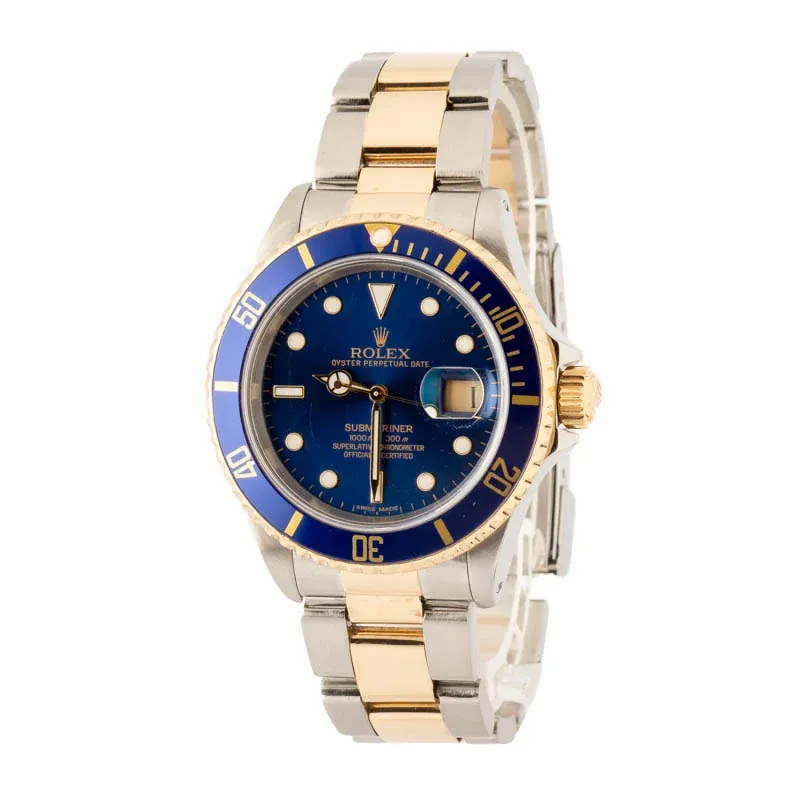
Ask about a pre-owned watch and the conversation reaches box and papers within about a minute. The phrase is shorthand for everything that came with the watch when it was first sold: the presentation box, the warranty card or certificate, and the booklets. A watch that still has all of it is a full set. A watch with none of it is, in trade language, a watch only.
What the paperwork does not do is prove the watch is genuine. That distinction is the single most useful thing a buyer can learn here, because it changes how you read a listing, how you price a watch that has lost its set, and when a missing card should genuinely worry you rather than simply earn you a better deal.
What box and papers actually means
There is no industry standard for what a set contains, which is part of the confusion. Contents vary by brand, by model and by decade. A rough division helps: the papers are the documents that tie one specific serial number to one specific first sale, and the box is everything else.
The warranty card or certificate
This is the part that carries weight. Historically most brands issued a paper certificate, often punched or stamped to indicate the model and filled in by hand by the retailer. Rolex used a punched paper certificate for many years before moving to a plastic card carrying the reference and serial number, stamped and dated by the authorized dealer who sold the watch. Omega, Longines and most of the Swiss industry made a similar journey from booklet to card.
Whatever the format, the function is identical: it records that this exact serial number was sold by an authorized retailer on a particular date. That date starts the manufacturer warranty clock, which is why a card left blank or undated is worth noticeably less than a completed one — and tells you nothing about when the watch entered service.
The box, booklets and extras
The rest of the set is less important to value but not irrelevant. A complete presentation usually means an outer card sleeve, the inner box, an instruction manual for the specific caliber, a warranty booklet, sometimes a chronometer certificate on models that carry one, and a travel pouch or bezel protector.
One extra is routinely forgotten and genuinely valuable: the bracelet links removed when the watch was sized for its first owner. On a steel bracelet they are replaceable but not cheap; on a precious-metal bracelet they are expensive. If a watch is coming to you on a short bracelet, ask whether the spare links are in the box before you agree a price, not after.
Full set, partial set, watch only
Listings use these terms loosely, so it is worth knowing what each should mean.
| Description | What it should include | Effect on price |
|---|---|---|
| Full set | Watch, dated warranty card or certificate, boxes, booklets, spare links and any original extras | Commands the highest price, particularly on modern references |
| Box and papers | Watch, dated card or certificate, presentation box — booklets and extras may be missing | Close to a full set in practice for most buyers |
| Papers only | Watch and the dated card or certificate, no box | Most of the premium survives; boxes are the easier part to replace |
| Box only | Watch and presentation box, no documentation | Little premium over watch only |
| Watch only | The watch, nothing else | The baseline price, and often the better value |
| Vintage, with papers | Period-correct certificate matching the watch, sometimes the original receipt | Can be a significant premium because survival is rare |
Why a complete set moves the price
Three things are happening at once. The first is liquidity: a full set is easier to sell on, so the next buyer pays for not having to explain a gap. The second is provenance — documentation linking a serial number to an authorized dealer and a date narrows the range of possible histories, which reduces risk. The third is collector preference, which is not always rational but is real, and it bears on anyone thinking of a watch partly as a store of value, as our piece on the best luxury watches for investment discusses.
The premium is not uniform. It is largest on modern, in-production, high-demand references, where the market expects complete sets and a missing card stands out. It shrinks on older pieces and almost disappears on genuinely vintage watches, where little survived. It also scales with value: at the top of a catalog, where Patek Philippe sits, documentation gets scrutinized far more closely than at the entry end.
What papers prove, and what they do not
A warranty card proves a sale happened. It does not prove that the watch in front of you is the watch the card was issued for. Cards and certificates are documents, and documents are forgeable — so are the dealer stamps on them. More common than outright forgery is transplanting: a real card sold alongside a different watch of the same reference, or a card held back so it could be paired with something else later.
Papers also say nothing about the condition or originality of the watch itself. A watch can have a flawless full set and a replacement dial, refinished hands, an over-polished case or a movement full of aftermarket parts. None of that shows up on a card. The paperwork is one input among several, and it ranks below the physical examination, which is the subject of our guide to spotting a fake luxury watch.
Checks worth running on the paperwork
- Serial agreement. The serial on the card must match the serial engraved on the watch, character for character. This is the single most important check and the one most often skipped.
- Reference agreement. The reference on the card should match the watch, and both should be consistent with the configuration in front of you.
- Period plausibility. The card format should be right for the era. A card style the brand did not use until years after the watch was made is a problem.
- Dealer detail. A completed stamp, a legible dealer name and a date are what make a card useful. Blanks reduce it to decoration.
- Consistent aging. Paper from the right decade looks its age; a pristine certificate with a heavily worn watch invites a question.
- What the seller means by papers. Some listings count a generic instruction booklet as papers. Ask specifically whether there is a dated, serial-matched card.
Service papers and what they are worth
A service paper is a different document with a different job. It is the invoice or service record issued when a watch is serviced, either by the manufacturer or by an independent watchmaker. At minimum it should show the date, the work performed, and any parts replaced. Manufacturer servicing usually carries its own limited warranty on the work, which is a tangible benefit on an older watch.
For a watch you intend to wear, a recent service paper can be worth more in practice than the original warranty card. It tells you the movement has been cleaned and lubricated and the gaskets looked at. On a watch with no service history at all, assume a service is coming and budget for it; our watch care guide covers what that involves.
Service paperwork has a second use that cuts the other way, and that is a good thing. A detailed invoice lists replaced components, so it can reveal that a dial, a set of hands or a bezel insert was swapped. Collectors often prefer original parts even when they are worn, and a record of what changed lets you price the watch accurately instead of guessing. Treat a seller who volunteers it as one worth dealing with.
Buying a watch without papers
Buying a watch only is a perfectly reasonable decision, and often the smarter one. You pay less for the same watch, and if you keep it for years the discount matters more than a card you will never look at. The trade is that you will take a similar discount when you sell, so the saving is real but partly deferred.
What you should insist on instead is accountability from the seller. Papers are a weak substitute for a written guarantee, because a guarantee is enforceable and a card is not. Ask for authentication in writing, a warranty on the watch, and a returns window long enough to have the watch examined independently if you want to. That is why every watch we sell carries our Authenticity Guarantee, a 2-year movement warranty and a 14-day return under our refund policy, whether or not the original set survived.
On vintage, the calculation changes almost completely. Most watches from the middle of the last century lost their paperwork within a few years, because nobody kept the receipt for a tool watch. A vintage piece such as a Submariner reference 5508 is bought on the evidence of the watch itself — case condition, dial originality, correct hands and bezel. Expecting a complete set on something that old is unrealistic, and a seller who produces one should expect more questions, not fewer.
When missing papers are a genuine red flag
The warning cases are specific. A current-production, high-demand reference offered below the going rate with no papers, no serial disclosed and no returns is the pattern to walk away from. So is a seller who will not photograph the caseback or the engraved serial, or who becomes vague about where the watch came from. On recent high-value watches it is reasonable to ask about provenance directly, and a legitimate seller will not take offense. Our guide to buying a pre-owned luxury watch sets out the full process.
Archive extracts as an alternative
Several brands maintain production archives and will issue a document confirming what a given serial number was when it left the factory. Omega's Extract from the Archives and Patek Philippe's archive extract are the best known, and Longines has unusually deep records for its older production. The document typically confirms the caliber, the case or movement number, the original configuration and the year the watch was produced or invoiced.
That is often more useful than a warranty card, because it speaks to originality rather than to a sale. If an extract says a watch left the factory with a particular dial and case combination, and the watch in front of you matches, you have evidence that matters to a collector. What an extract does not do is reinstate a warranty, confirm current condition, or prove that nothing has been changed since. It is also not available everywhere: Rolex offers no comparable public archive service, which is one reason vintage Rolex originality rests so heavily on physical examination.
Extracts are usually requested by the owner, carry a fee, and take time to arrive. If one would settle a question, ask whether the seller already holds it rather than assuming you can obtain it quickly yourself.
How this looks across real stock
It helps to see how the question lands across a real catalog. We hold 650 watches across 40 brands, priced from $99 to $120,995, and the paperwork picture follows the mix of new and pre-owned. Most of our Longines stock is new, from about $395 to $5,550, as is most of our Hamilton stock from about $445 to $2,645 — new watches arrive as complete factory sets with full manufacturer warranty. Our Rolex range of 149 watches, from about $2,895 to $120,995, is mostly pre-owned with a smaller vintage group, and set completeness varies piece by piece. Ask what a specific watch comes with rather than assuming a brand-wide answer.
Looking after your own set
If you buy a watch with its papers, the work is small and the payoff comes years later. Keep the card and any service invoices together, somewhere dry and separate from where the watch lives — a card sitting beside the watch is convenient for a thief. Photograph the documents and the engraved serial. Keep every spare bracelet link, including the ones a jeweler removes during sizing, and keep the outer sleeve rather than discarding it, since that is usually the first casualty. None of it is glamorous, and all of it is worth money when you eventually sell or pass the watch on.
The summary is straightforward. Papers add value and liquidity, they are not proof of authenticity, service records often matter more day to day, and a watch only from a seller who guarantees it in writing beats a full set from one who will not. If you want help weighing a specific example, browse the full catalog or get in touch and ask what that watch actually comes with.