
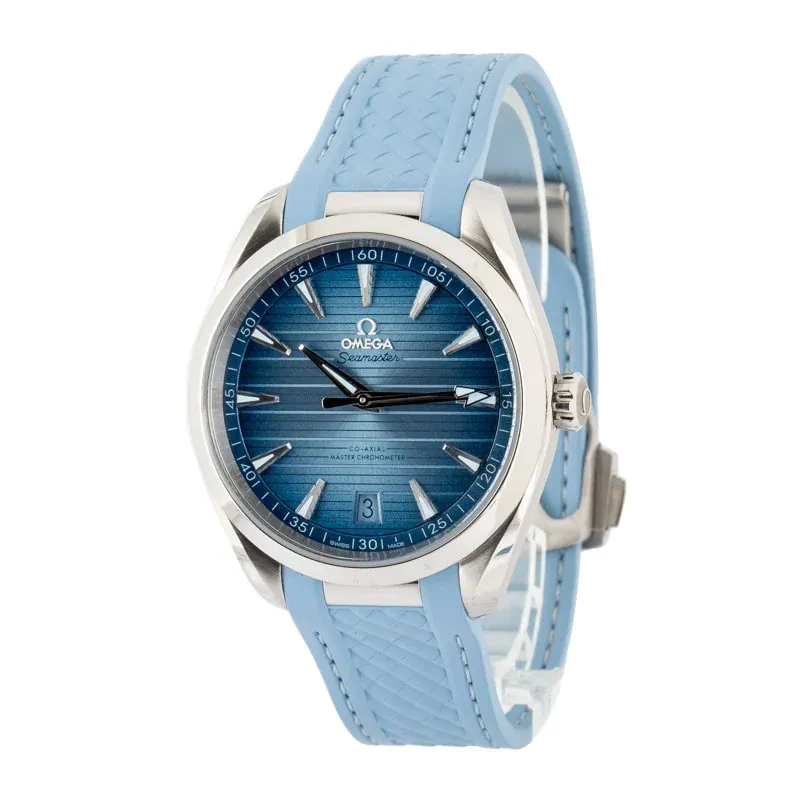
Omega is the rare luxury brand that gives you a genuine choice rather than a single obvious answer. There is a diver, a chronograph, a dressy sports watch and a proper dress watch, all built to the same standard, and all of them available at prices that overlap. That breadth is a gift once you know how to navigate it and a source of paralysis until you do.
This guide is written to be used rather than admired. It sets out what each of the four main collections is actually for, which movement generation you are looking at and why that matters, how the sizes wear in practice, what to inspect on a pre-owned example, and how Omega stacks up against the brands you are probably cross-shopping. Our current Omega stock runs to 89 watches — 83 pre-owned and 6 new — from about $1,000 to just under $30,000, which is a fair reflection of how wide the brand's range really is.
A short history, and why it matters
Omega has been making watches in Switzerland since the nineteenth century and has spent most of the twentieth and twenty-first centuries in two arguments it largely won: precision and legitimacy. It became the official timekeeper of the Olympic Games in the 1930s and has returned to that role many times since. It supplied watches to military forces. And in 1969 a Speedmaster went to the lunar surface, having been qualified by NASA against competing chronographs for manned spaceflight.
This belongs in a buying guide because it explains the shape of the catalog. Omega's collections are not marketing constructs invented to fill price points — they are the surviving lines of a company that made instruments for divers, pilots, astronauts and desk-bound professionals, and each still carries the design logic of its original job. That logic is the fastest route to knowing which one is yours.
The four collections at a glance
| Collection | Character | Water resistance | Best for |
|---|---|---|---|
| Seamaster Aqua Terra 150M | Clean, dressy-sporty, no rotating bezel | 150m | The one-watch buyer |
| Seamaster Diver 300M | Full tool diver, wave dial, helium escape valve | 300m | Everyday sports wear and water |
| Seamaster Planet Ocean 600M | Larger, more serious diver | 600m | Big wrists, real diving |
| Speedmaster Moonwatch Professional | Hand-wound chronograph, flat profile | Modest — keep it dry | History and ritual |
| Speedmaster Reduced | Smaller automatic chronograph | Modest | Speedmaster looks, smaller wrist |
| Constellation | Distinctive claws, integrated bracelet | Light — splashes only | Dressy daily wear, two-tone lovers |
| De Ville Prestige | Traditional round dress watch | Light — splashes only | Suits, cuffs, formal occasions |
Seamaster — the broad church
Seamaster is not one watch, and this trips up more buyers than any other point about the brand. It is an umbrella covering everything Omega considers water-capable, and the three references most people encounter are meaningfully different objects. The Aqua Terra 150M has no rotating bezel, a vertically ribbed dial pattern and a slim, symmetrical case — it is the most versatile watch Omega makes and the one we would point most single-watch buyers toward. The Diver 300M is the recognizable tool diver with the wave dial, the skeletonized hands and the helium escape valve. The Planet Ocean 600M is bigger, thicker and more purposeful, and it wants a wrist that can carry it.
If you are choosing between the diver and the Speedmaster specifically, we have written that comparison up in full in Speedmaster vs Seamaster and there is no point repeating it here. What that piece does not do is push you toward the Aqua Terra, which deserves more attention than it gets. A great many people who think they want a dive watch actually want a watch that survives a swim and still looks right with a jacket, and that is precisely the Aqua Terra's brief.
Speedmaster — the historical instrument
The Moonwatch Professional in 42mm is the reference that carries the story: a hand-wound chronograph with a fixed tachymeter bezel, three registers and a case profile flat enough to disappear under a shirt cuff. It asks you to wind it, which is either a small daily pleasure or a recurring nuisance depending on temperament, and it is not a watch for swimming.
The Speedmaster Reduced is the quiet alternative and it is worth knowing about. It is a smaller, automatic interpretation of the same design from the 1990s and 2000s, and for anyone whose wrist finds 42mm a stretch it delivers the Speedmaster look in far more wearable proportions. It uses a modular automatic chronograph rather than the classic hand-wound caliber, so check service history carefully, but as a way into the family it is often better value than the headline model.
Constellation — the one people underrate
The Constellation is Omega's chronometry line, and the observatory medallion on many casebacks refers to the brand's history in precision timing trials. Visually it is unmistakable: the four claws gripping the bezel, the integrated bracelet, and on many references a bezel carrying Roman numerals. It is dressier than a Seamaster and sportier than a De Ville, and the integrated bracelet means it sits close and flat on the wrist in a way that no strap watch quite matches.
Two-tone Constellations are among the best value in the brand right now, partly because steel-and-gold has spent years out of fashion and is only now returning. The ladies' Constellations are a genuinely strong proposition too — properly built mechanical and quartz watches in small case sizes, from a brand with real horological credibility, at prices that compare very favorably with fashion-house alternatives. Our Omega collection usually carries several.
De Ville — the dress watch
The De Ville Prestige is the traditional end of the range: a round case, slim profile, applied markers, often a leather strap. It is the Omega you buy when you already own a sports watch and want something that works under a cuff without argument. It is also, historically, significant — the co-axial escapement made its production debut in a De Ville. If you wear formal clothes with any regularity, this line solves a problem the rest of the catalog does not.
Movements: what to recognize
Omega's modern technical identity rests on two things, and telling them apart is the most useful skill you can bring to the pre-owned market.
The first is the co-axial escapement, invented by the English watchmaker George Daniels and put into series production by Omega at the end of the 1990s. It replaces the conventional lever escapement with a design that reduces sliding friction where the escapement transfers energy, the intent being longer intervals between services and more stable timekeeping over the life of the movement. Watches carrying it say so on the dial. If you want the underlying mechanics explained properly, our guide to watch movements covers escapements, winding and the differences that actually affect ownership.
The second is Master Chronometer certification, a later and more demanding standard. What makes it unusual is that it tests the fully cased watch rather than a loose movement, and it includes resistance to very strong magnetic fields alongside precision, power reserve and water resistance. Magnetism is an underrated everyday hazard given how many magnets now live in bags, laptop cases and phone mounts, and Omega's approach to it is a real functional advantage rather than a marketing line.
Practically, that gives you three broad generations on the pre-owned market. Older watches with conventional escapements, often based on well-proven sourced calibers, are dependable and easy to service anywhere. Co-axial models from the 2000s onward brought the escapement and, on many references, an in-house architecture. Master Chronometer models are the current generation. None of these is a bad buy, but they are not interchangeable, and the price you pay should reflect which one is in the case. Ask the seller directly and get the answer in writing.
Sizing and how Omega wears
Omega cases tend to wear close to their stated diameter, which is not true of every brand, and the numbers are worth taking seriously. The Moonwatch Professional at 42mm reads smaller than that figure suggests because the case is flat and the lugs are short — it is one of the easiest 42mm watches to wear. The Diver 300M at a similar diameter reads larger, because it is thicker and the bezel adds visual weight. The Planet Ocean 600M is the biggest of the mainstream references and is genuinely a large watch.
The Aqua Terra is offered across a wide span of sizes and is the collection to look at if you want to fine-tune the fit. Constellation runs from small ladies' cases up through mid-size, and its integrated bracelet makes it feel more compact than its diameter implies. De Ville Prestige sits in classic dress-watch territory.
Two things matter more than diameter. The first is lug-to-lug length, which determines whether the watch overhangs your wrist. The second is thickness, which decides whether it fits under a cuff. A flat 42mm watch is more wearable than a tall 39mm one, and no specification sheet tells you that as clearly as five minutes with the watch on. If you cannot try one on, ask us for the lug-to-lug of the specific piece before you buy.
What to check on a pre-owned Omega
Most Omegas on the market are pre-owned — 83 of our 89 in stock — and that is where the value is. The checks are not difficult, but they are specific.
- Reference and caliber. Confirm the exact reference, not just the collection, and establish which movement generation it carries. Two visually similar watches can differ substantially in both mechanics and value.
- Dial and hand originality. Service replacements are legitimate and common, but they should be disclosed. Ask whether the dial, hands and bezel insert are original to the watch.
- Bezel action on divers. The Diver 300M and Planet Ocean should rotate in one direction only, with defined clicks and no play. A bezel that slips is a repair, not a quirk.
- Chronograph function on a Speedmaster. Start, stop and reset should feel crisp, all hands should snap cleanly back to zero, and the sub-dial hands should sit exactly on their markers.
- Crown and pushers. The crown should screw down smoothly without catching. Pushers should have a definite action rather than a mushy one.
- Water resistance. This is a property of gaskets that age, not a permanent specification. Ask when the watch was last pressure-tested, and have it tested again before you swim with it.
- Polishing. Over-polishing softens the case edges and thins the lugs. On a Speedmaster, look at the crispness of the lug bevels; on a Constellation, look at the claws.
- Bracelet condition. Hold it horizontally by the clasp. Sag and lateral play mean worn links, which is expensive to correct on older references.
Omega is counterfeited widely enough that authenticity deserves real attention, and the most reliable protection is provenance rather than expertise. Every watch we sell is inspected and guaranteed genuine under our Authenticity Guarantee, backed by a 2-year movement warranty, and returnable within 14 days. If you are new to the secondhand market entirely, read how to buy a pre-owned luxury watch alongside this guide.
How Omega compares with its peers
The inevitable comparison is with Rolex, and it is a fairer fight than the resale charts suggest. Omega's technical case is strong — the co-axial escapement and Master Chronometer testing are substantive engineering rather than positioning — and the catalog is more varied and more interesting to browse. What Rolex has is universal recognition and the deepest secondary market in watches, which translates into stronger value retention. If you intend to sell, that matters. If you intend to wear, it matters much less than people assume.
Against Tudor, Omega generally sits a step above on movement sophistication and finishing, with Tudor answering on price and vintage-inspired character. Against Breitling, the comparison is closest in chronographs, where Breitling's aviation heritage runs deeper and Omega's space heritage is unmatched. Longines and Grand Seiko are the value and finishing arguments respectively, and both are worth a look before you commit.
The honest summary is that Omega offers more watch for the money than almost anything else in Swiss watchmaking, provided you are not buying primarily for resale. The engineering is competitive at every point in the range, and the range itself is wider than any of its direct rivals can offer.
How to choose
Reduce it to how you actually spend your week. If you need one watch for everything, the Aqua Terra. If you want a sports watch you can swim in and wear daily, the Diver 300M. If you want presence and real dive capability, the Planet Ocean. If you want the history and do not mind winding, the Moonwatch Professional — or the Reduced if 42mm is too much. If you want something dressier that still gets worn daily, the Constellation. If you need a watch for formal clothes, the De Ville Prestige.
Then set a budget and be patient. The pre-owned market rewards buyers who wait for the right condition and the right reference rather than taking the first acceptable example. Browse the current Omega collection, or get in touch if you want a specific reference sourced. There is no wrong Omega — only the one you chose deliberately and the one you did not.