
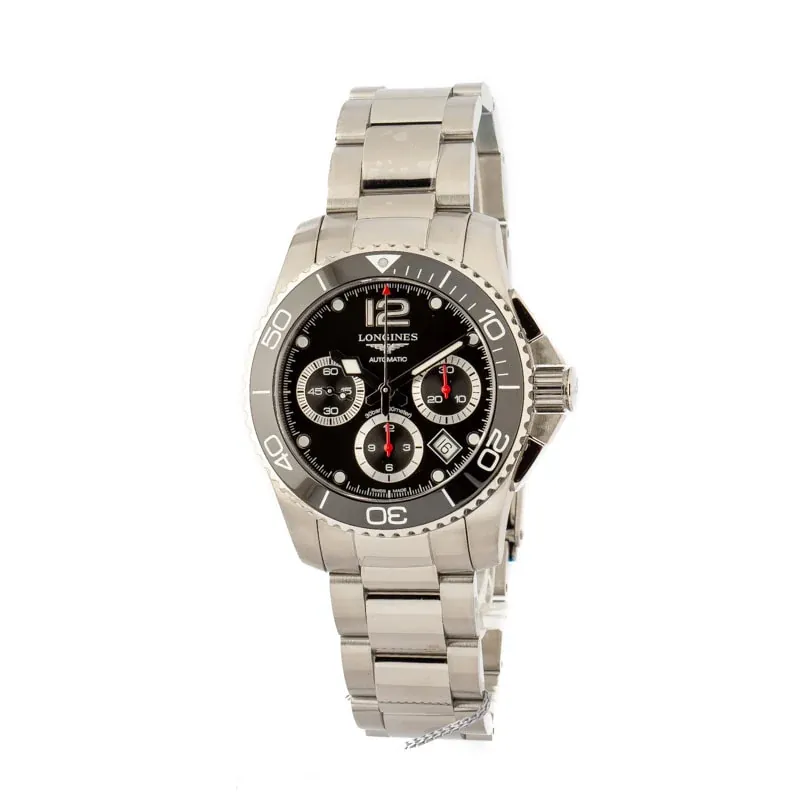
A first luxury watch is an unusual purchase. It costs enough to deserve real thought, yet there is no specification sheet that tells you which one is correct, and a good deal of the available advice is really marketing. The watch that suits you is rarely the one with the most impressive movement or the strongest resale record. It is the one you reach for without thinking on an ordinary Tuesday morning.
What follows is about getting that decision right the first time: how to set a budget that accounts for the parts people forget, how to judge whether a watch can genuinely do everything, which brands make the most sensible entry points, whether to buy new or pre-owned, and the handful of errors behind most first-watch regret.
What a luxury watch actually buys you
It helps to be clear about what you are paying for, because it is not accuracy. An inexpensive quartz watch will keep better time than almost any mechanical watch at any price. What a luxury watch offers instead is construction, materials and longevity: a case machined to tight tolerances, a sapphire crystal that resists scratching, gaskets and a screw-down crown that keep water out, a bracelet with solid links and a clasp that still closes properly after a decade, and a movement that can be dismantled, cleaned and returned to service indefinitely rather than thrown away.
The second thing you are buying is permanence. A well-chosen luxury watch is one of very few objects you can use daily for thirty years and then hand on. That is the honest reason the category exists. If the appeal for you is mainly the badge rather than the object, it is worth knowing that before you spend, because the badge wears off faster than the watch does.
Resale is the third factor, and the most often overstated. Watches from established brands hold value reasonably well, and a few hold it exceptionally well, but a watch is not a savings account. For a first watch, treat value retention as insulation against regret rather than as a reason to buy.
Set the budget before you choose the watch
Choose the number first, then shop inside it. Doing it the other way around is how people end up stretching for a model they only half-wanted and quietly resenting it. Our catalog currently holds 650 watches across 40 brands, with prices running from $99 to $120,995, which means there is something credible at almost any level you set — and that breadth is exactly why an undefined budget is dangerous.
A useful way to frame it: pick the figure you could spend without changing anything else about your month, then shop at or below it rather than above it. A watch bought comfortably gets worn. A watch bought uncomfortably gets protected, and a protected watch is a poor use of several thousand dollars.
The costs people forget
Three recurring expenses sit behind the sticker price. The first is servicing: a mechanical watch needs periodic cleaning and re-lubrication, and while the interval depends on the movement and how the watch is used, the bill is real and recurring. The second is straps and bracelet adjustment, minor but not nothing, and the cheapest way to change how a watch wears. The third is insurance, which scales with value. None of these should deter you — they should simply come off the top of the budget rather than arriving later as a surprise.
The one-watch test
Most first-time buyers are, whether they realize it or not, shopping for a one-watch collection. That reframes the decision usefully. Instead of asking which watch is best, ask whether this one can handle every setting your week actually contains — the office, the gym bag, a wedding, a holiday, a hardware store on a Saturday. Few watches pass that test, and the ones that do share the same handful of traits.
They are moderate in size and thickness, so they fit under a cuff without fighting it. They are water-resistant enough to be worn without thought near a sink, a pool or the sea. They have a dial that is legible at a glance rather than a puzzle to be solved. They come on a bracelet or strap that can be swapped, which is the cheapest way there is to make one watch feel like two. And they avoid aggressive styling, because the loudest watch in the shop is usually the first one you tire of.
This is why a steel sports watch on a bracelet, a simple three-hand watch with a date, or a dive watch in the 38mm to 41mm range so often ends up as the recommendation. They are not exciting answers. They are the answers that still look right in five years.
Size and fit come before style
Fit is the single most underrated variable, and the one that most often turns an admired watch into an unworn one. Case diameter is only part of it. Lug-to-lug length — the distance from the tip of one lug to the tip of the other — determines whether the watch sits on your wrist or overhangs it, and case thickness determines whether it slides under a shirt sleeve or catches on it. A 40mm watch with long lugs can wear larger than a 42mm watch with short ones.
If you can try watches on, do. If you cannot, measure your wrist, note the lug-to-lug figures of anything you are considering, and be skeptical of wrist shots taken by people with different wrists. Smaller is the safer error for a first watch: an understated watch flatters almost everyone, while an oversized one is permanently obvious.
The strongest entry points in stock
Several brands are built around precisely this buyer, and a few of them are the ones we hold in the greatest depth. The table below covers the four we can speak to most concretely, with live stock figures and current catalog ranges.
| Brand | In stock | Current stock range | Character | Natural first pick |
|---|---|---|---|---|
| Hamilton | 45 | About $445 to $2,645 | Military and field heritage, mostly new stock | Khaki Field Murph 38mm |
| Longines | 66 | About $395 to $5,550 | Traditional Swiss, dress through to diver | HydroConquest or Spirit Zulu Time |
| Omega | 89 | About $1,000 to just under $30,000 | Serious horology with genuine icons | Seamaster Aqua Terra 150M |
| Rolex | 149 | About $2,895 to $120,995 | Maximum recognition and resale strength | Submariner Ref 114060 |
Hamilton and Longines: the honest starting line
If this is your first mechanical watch and you would rather not spend heavily to find out whether you enjoy the hobby, these two are the sensible place to begin. Hamilton's identity is built on field and aviation watches, and the Khaki Field line in particular is about as close to a universally recommendable first watch as the market offers, with the 38mm Murph versions fitting almost any wrist and the Khaki Aviation Pilot Pioneer giving the same ruggedness a dressier face. Most of our Hamilton stock is new rather than pre-owned, which keeps the purchase simple.
Longines covers more ground. The HydroConquest is a proper dive watch, the Spirit and Spirit Zulu Time lines lean aviation with a second time zone on the Zulu, and the Master Collection and Flagship sit firmly on the dress side. That range means a single brand can probably answer whichever direction your taste turns out to point. As with Hamilton, the majority of the Longines watches we hold are new.
Omega, Tudor and Rolex: stepping up
Above that tier the conversation changes. Omega offers real horological substance and two of the most recognizable watches ever made, and the Seamaster Aqua Terra is among the most genuinely versatile watches in the category — enough water resistance to forget about, dressy enough for a jacket. The Speedmaster is the other obvious entry point, and choosing between them comes down to whether you want a chronograph you will rarely time anything with or a watch you can swim in.
Tudor, founded by Rolex's own founder, is the standard answer for anyone drawn to the crown but unwilling to pay for it, and at 38 watches it is one of our larger collections — worth browsing before you commit, since the Tudor range delivers much of the same engineering for considerably less. Rolex itself is the deepest collection we carry, and the reason people buy it is no secret: universal recognition, slow design evolution, and the strongest resale in the market. Our Rolex stock is heavily weighted toward the Submariner, the model most often described as the one watch to own. Just be honest with yourself about whether you want a Rolex or want to be seen wearing one. Both are legitimate motives, and they lead to different purchases.
Tissot and Oris are both worth a look alongside these, since both build watches aimed squarely at first-time buyers, and you can see the full spread across our complete catalog.
New or pre-owned
For a first watch, pre-owned is usually the better value and occasionally the better watch. Most of our stock is pre-owned, with a smaller number new, and the advantage is not only price. The secondary market gives you access to discontinued references, dial colors and case sizes that are no longer made, and configurations no boutique can sell you today. It is a wider menu rather than a compromise.
The caveat is that condition and authenticity become your problem rather than the manufacturer's — unless you buy from a seller who takes them on. That is the entire argument for buying from a specialist instead of an open marketplace. Every watch we sell is inspected and guaranteed authentic, carries a two-year movement warranty, ships free and insured within the US, and can be returned within 14 days. The detail is set out in our Authenticity Guarantee and warranty terms.
If you are new to the secondary market entirely, read how to buy a pre-owned luxury watch before committing to anything. New makes most sense when you want a current reference with a full factory warranty and the exact configuration you pictured, and the premium over a comparable used example is small.
Mechanical or quartz
This matters less than enthusiasts suggest, but it is worth deciding deliberately. A mechanical watch — automatic or hand-wound — is the traditional choice and the one with the craft appeal. It needs winding or wearing to keep running, it will drift by seconds a day, and it will need servicing. An automatic is the default for daily wear; a hand-wound watch is thinner and demands a small daily ritual that some people enjoy and others find tiresome.
Quartz is more accurate, thinner, cheaper to maintain and entirely unembarrassing. For a watch that will sit in a drawer between occasions, quartz is arguably the more practical answer, because it will be showing the right time when you pick it up. Several of the brands above offer both. If the distinction is unclear, watch movements explained covers how each type works and where the real trade-offs lie.
Mistakes first-time buyers make
- Buying the hyped model rather than the wearable one. The watch everyone online is discussing is not necessarily the watch that suits your wrist, your week or your wardrobe.
- Going too large. Oversized cases were fashionable for a while and are now dating badly. Err smaller.
- Treating it as an investment. Buy it to wear. If it holds value, that is a bonus rather than the plan.
- Stretching the budget to its limit. A watch that makes servicing feel like a burden is the wrong watch at the wrong price.
- Shopping on price alone. A suspiciously cheap example of a desirable reference is cheap for a reason — a replaced dial, a tired bracelet, a deferred service, or worse.
- Ignoring provenance. Counterfeits have improved considerably. Buying from a seller who guarantees authenticity in writing, and who will take the watch back if anything is wrong, is the protection that actually works.
- Rushing. The pre-owned market is deep and rewards patience. The right watch in the right condition comes around more often than it feels like it will.
A simple way to decide
Work through it in order. Set the budget, servicing and insurance included. Decide whether you want one watch that does everything or the first of several, because that single answer changes everything downstream. Pick a format — diver, field, dress, chronograph — based on what you actually wear rather than what you admire in photographs. Then shortlist two or three specific references in your size range and sit on the decision for a week. If one of them is still on your mind at the end of it, that is your watch.
If budget is the binding constraint, our roundup of the best luxury watches under $5,000 is the most useful companion to this piece. Otherwise start browsing the shop, or get in touch and tell us your budget and your wrist size — narrowing 650 watches down to three is the part we are genuinely useful for.